
Custom Sample Packaging Boxes — Prototype & Wholesale OEM
Yongjian produces sample and prototype packaging boxes as a packaging manufacturer and OEM/ODM supplier in China, supplying white folding cartons, rigid boxes with fitted trays and unprinted structures to brands, agencies and product teams. With 25 years of in-house paper packaging production, we build every project as a private label or custom printed sample, from dieline and structural design through to a physical prototype in about three days and made to order bulk production afterwards. As a B2B packaging solutions partner, we quote, produce and ship sample packaging for buyers who need factory-direct supply.
- Low MOQ
- Factory-direct
- OEM & ODM
- Private label
- Bulk orders
- 3-day sampling
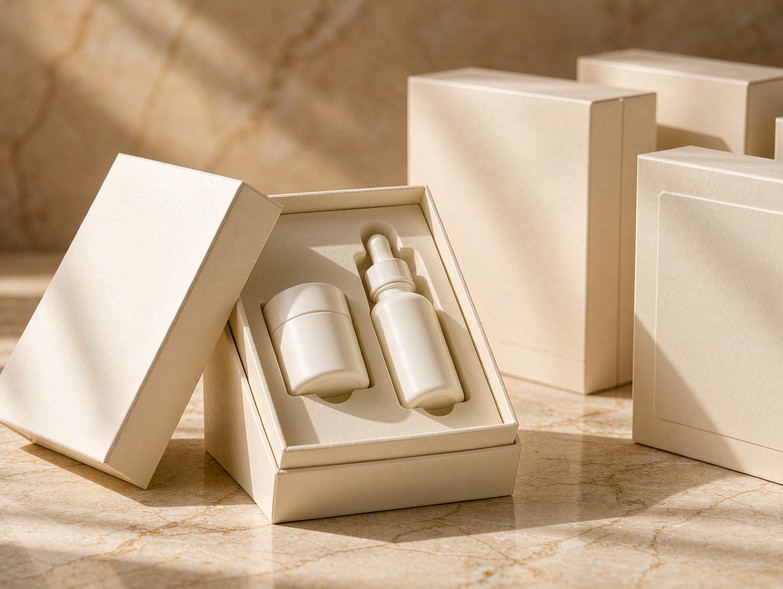
What a sample has to answer
A sample is not a smaller version of the final pack. It is the thing the team signs off on, so it has to answer the questions the printed version will be judged on later.
Does the product fit?
The first question is always dimensional. A sample has to hold the real product in the position it will be shipped in, or the approval is worthless.
Does the structure hold its shape?
Board grade and construction decide whether a box keeps its form on a shelf. That can only be judged in the hand, which is why a physical sample matters.
Does the finish work?
Lamination, embossing and foil can only be judged on the real board. A screen approximation does not tell you how the surface behaves under light.
Which structure to prototype first
Most projects only need one or two structures sampled, because the sample answers a structural question rather than showing every option. This is the shortlist we usually work from.
| Structure | Formats it suits | What the sample proves | MOQ & lead time position |
|---|---|---|---|
| White folding carton | Retail packs where fit and board are the open questions | Proves the internal fit, the fold registration and how the board takes the print | Fastest to produce, lowest sample cost, ready in about three days |
| Rigid box with tray | Gift sets and premium formats where the insert matters | Proves the tray cut, the item positions and how the lid closes against the tray | Moderate; tray tooling needed, 10–15 day lead time |
| Corrugated prototype | Shipping formats and display units | Proves board strength, the fold sequence and whether it assembles without tools | Moderate; flat-packed for review, 10–15 day lead time |
| Paperboard tube | Round formats and premium shelf presence | Proves the seam, the wall thickness and how the tube seals | Moderate; tube tooling needed, 10–15 day lead time |
| Window structure | Formats where the product must be visible | Proves the window cut, the backing fit and how light reads through it | Moderate; window die-cut needed, 10–15 day lead time |
The insert is usually the part that needs sampling first
In most projects the outer box is straightforward and the insert is where the fitting problem sits. Sampling the insert on its own is faster and cheaper than reworking a complete box.
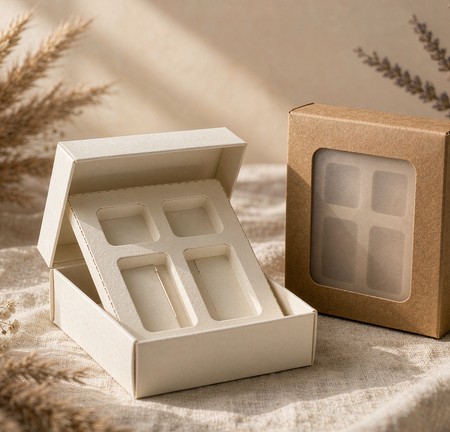
- Die-cut paper tray cut to the product profile, which is the usual first sample because it is where fit problems appear.
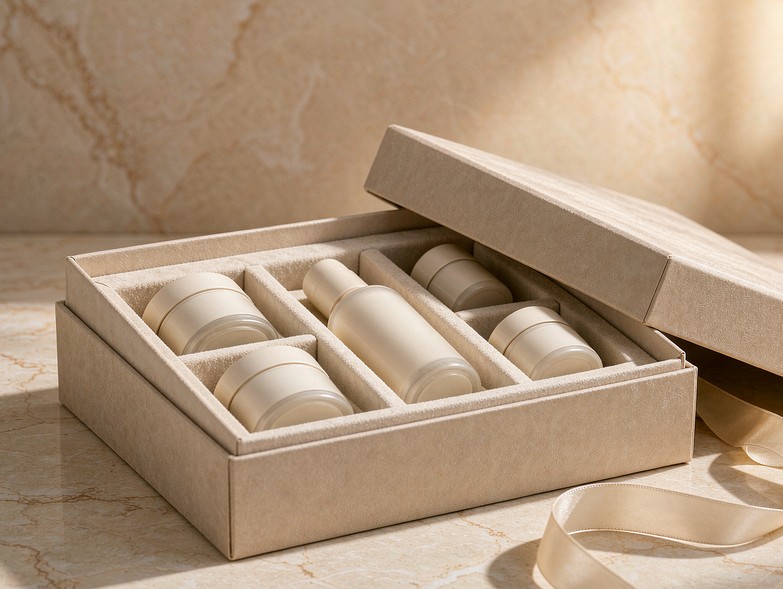
- Card divider or cradle for sets and multi-item packs, holding each item in a fixed position.
- Pulp moulded tray where a deeper, heavier cradle is needed; tooling cost and minimums are higher than paper.
- Window backing board where a window structure is being tested, proving the fit behind the clear panel.
Send the product or pack dimensions, the number of items and the decision the sample has to settle, and we will recommend what to make first.
White board is the default, kraft and rigid are specified too
A sample is normally made in an unprinted white or kraft board so the judgement is about structure. Where a finish decision matters, a coated or rigid board can be sampled instead.
| Material | Positioning | Print behaviour |
|---|---|---|
| White uncoated board | Structure and fit review, the usual sample default | Neutral tone so the team judges the construction rather than the print |
| Kraft paperboard | Natural and organic formats where tone affects the decision | Warm fibre tone; shows how dark inks will read on uncoated stock |
| Coated folding carton | Finishes where gloss and matt need to be compared | Offset or digital print reproduces the finish so lamination can be judged properly |
| Greyboard with printed wrap | Rigid formats where board weight matters | The wrap sheet carries the artwork so the board rigidity can be judged in the hand |
FSC-certified board is available across the folding carton and rigid ranges, and soy-based inks can be specified where a brand or agency needs it documented. Barrier and product-contact requirements are driven by your own compliance team — tell us what you need documented and we build to that spec. We do not make regulatory or certification claims on your behalf.
Sample requests and what each one settles
A sample request usually answers one specific question rather than presenting options. Naming that question upfront is what makes the sample useful.
Fit confirmation
A plain carton sized to the real product, settling the internal dimensions before any artwork is committed.
Request a quote →Insert and tray approval
A die-cut tray sampled on its own, which is usually the fastest way to settle a fitting problem.
Request a quote →Board and finish review
A coated or rigid board sample so lamination, embossing and board weight can be judged on the real material.
Request a quote →Structure and assembly check
A corrugated prototype, flat-packed, to confirm the fold sequence and whether it assembles without tools.
Request a quote →A sample packaging manufacturer you can hold to account
We are a factory, not a trading company. That matters for a sample because the structure, the board and the insert are all specified and produced in-house, and the same team then produces the bulk run.
25 Years In-House Production
Every sample is made in our own factory — printing, cutting, folding, assembly and packing. The sample and the production run come from the same equipment, so what you approve is what gets made.
Factory-Direct Pricing
We quote from production cost rather than a trading margin, and a sample that settles a fitting problem early is cheaper than reworking a bulk order. Bulk production is then priced by structure and board.
Quality Control At Every Stage
Our in-house production checks cover board thickness, print colour, fold registration and fit, and our turnaround is scheduled per order rather than left open, with records you can keep on file.
Sample In About Three Days
A physical sample is typically ready within three days of confirmed artwork or confirmed dimensions, with a dieline issued for your engineering check. Bulk production completes in 10–15 days after approval.
Who we produce sample packaging for
Most sample requests come from one of six buyers. We handle them the same way for all of them — what changes is the structure being tested and how fast the decision is needed.
Brands and product teams
You need to confirm fit and board before artwork is committed. We produce a custom printed or private label sample against your dimensions.
Design and packaging agencies
You specify structures for clients and need a factory that samples to a dieline. We work to your structure and issue the dieline with the sample.
Contract manufacturers
You run the fill and need to validate cartons before committing a run. We work to your specification and your delivery window.
Importers and distributors
You are qualifying a supplier before placing an order. We supply bulk production after the sample, with export packing prepared as part of the order.
Retailers and buyers
You need to see the physical structure before approving a supplier. Samples are supplied against a purchase specification.
Startups and first-run projects
You are testing a product and need a low MOQ first run. A sample settles the structure, and digital printing suits short production runs afterwards.
How a sample request moves through production
- 1
Enquiry
Product or pack dimensions, items per box, and the decision the sample has to settle.
- 2
Structure advice
We recommend what to sample first, which is usually the carton or the tray rather than a complete range.
- 3
Quotation
Sample cost stated separately from bulk production, so approving the sample is not a commitment to the run.
- 4
Dieline issued
A dieline prepared for your engineering check before anything is cut.
- 5
Sample produced
A physical sample typically within three days of confirmed artwork or dimensions.
- 6
Approval
Your sign-off on fit, board and construction, recorded against the dieline reference.
- 7
Production
The bulk run produced on the same equipment, completing in 10–15 days after approval.
Sample packaging questions
How long does a sample take?
A physical sample is typically ready within three days of confirmed artwork or confirmed dimensions, with a dieline issued for your engineering check. Formats needing custom tooling, such as a paperboard tube or a rigid box with a custom tray, take longer because the tooling has to be made first.
Should the sample be printed or plain?
Plain white or kraft board is the usual default, because the decision at sample stage is about fit, board and construction rather than artwork. A printed sample is worth making where a finish matters, such as comparing gloss and matt lamination on the real board.
What should we prototype first?
In most projects the outer box is straightforward and the insert is where the fitting problem sits, so a die-cut tray sampled on its own is faster and cheaper than reworking a complete box. Send us the dimensions and the decision the sample has to settle, and we will recommend what to make first.
Can you supply samples only, without a bulk order?
Yes. Sample cost is stated separately from bulk production, so approving a sample is not a commitment to the production run. Plenty of buyers use a sample to qualify a structure before approaching several factories.
Can you match the sample to our own requirements?
We build to the specification your own compliance team defines. Tell us the board, ink and any barrier requirements and we will produce to that spec and supply the documentation your buyer actually asks for. We do not make regulatory or certification claims on your behalf.
Will the bulk run match the sample?
Yes. The sample and the production run are made on the same equipment from the same dieline and board call-out, and we keep the specification on file against your reference so the run is produced to the same standard rather than re-engineered.
Request a Custom Quote for Sample Packaging Boxes
Product or pack dimensions, items per box, the decision the sample has to settle, and the destination market. We will come back with a structure recommendation and a sample quotation — a physical sample typically within three days, with a dieline issued for your engineering check. Factory-direct, low MOQ, 10–15 day bulk lead time.
Get a Custom QuotePackaging we build alongside sample packaging
Customization Capabilities
Our in-house structural design, printing, sampling and quality control, explained end to end.
Get a quote →OEM & Quality Process
How a specification moves from enquiry to production, including sampling and inspection.
Get a quote →Skincare Boxes
Carton, window box and tray structures, useful where a set insert is the open question.
Get a quote →Custom Packaging Manufacturer China
The wider capability page covering structural design, tooling and production.
Get a quote →