A packaging supplier sampling and approval process is a set of four gates between a digital proof and a production order. Its job is to catch what artwork cannot show: fit, color on the real paper, and whether a fragile product survives the trip. The short answer: approve a physical sample with your real product inside, keep a golden sample on both sides, and start the lead time clock only at that sign-off. This guide follows one launch through all four gates.
Contents
- The case: a sample that looked right and failed
- Why a digital proof cannot be the last gate
- The packaging supplier sampling and approval process, gate by gate
- Sample types: what each one can and cannot prove
- What to check on a fragile cultural product
- Scope and responsibilities: who signs, who records, who tests
- Where sampling sits in the delivery clock
- Conclusion: the sign-off that protects both sides
The case: a sample that looked right and failed
A home fragrance brand is launching three glazed ceramic diffuser gift boxes. The digital proof is approved in two days. The white dummy measures correctly. Then the first full sample arrives and three problems appear at once: the diffuser neck cannot be lifted out of the insert without tipping the box, the gold foil reads dull on the textured wrap, and a drop check leaves a hairline crack in the glaze that nobody sees until the box is opened. This is a composite of common sourcing situations, not a named customer or a reported result.
None of those three problems was visible in a PDF. All three are cheap to fix before tooling is cut and expensive to fix after a production run. That is the whole reason for a formal gate sequence. The gates below are the ones we use on cultural and creative products and home furnishings packaging projects, where the sample has to carry a fragile item.
Why a digital proof cannot be the last gate
A digital proof settles layout, text and the position of the dieline. It cannot settle color on a specific paper, the tolerance between a lid and a base, or how a hand reaches into a cavity. Those are physical questions, and they need physical evidence.
Three failure types belong to the physical stage. Color shifts with the substrate, the finish and the light it is viewed under. Structure shifts with board thickness, glue and wrapping tension, so a lid that fits in a drawing can bind in reality. Fit shifts with the real product, which is never quite the same as the CAD file, especially when it has a handle, a spout or a wide base. A screen cannot show any of the three.
This is also where a fast project can lose more time than it saves. Skipping the physical gate often moves the discovery into the first production week, when a die has already been cut and plates have already been made.
The packaging supplier sampling and approval process, gate by gate
Four gates are enough for almost every rigid gift box project. Each one has an owner, an output document, and a rule for what happens on a failure.
| Gate | What it proves | Who signs | Output | If it fails |
|---|---|---|---|---|
| 1. Digital proof | Layout, text, dieline, panel order | Brand and prepress | Approved artwork with a version number | Revise the artwork, keep the old version on file |
| 2. Physical pre-production sample | Real dimensions, material, color, finish, structure | Brand, QA and operations | Signed sample card with measurements | Revise and resubmit before any tooling commitment |
| 3. Functional check with the real product | Insert fit, removal path, closure, drop and transit behavior | QA and the packaging engineer | Test record with pass or fail results | Change the insert or structure, then retest |
| 4. Golden sample | The reference both sides will use in production | Both parties | Two sealed samples, one at each site, plus a revision log | No production starts until both samples match |
3.1 Who signs each gate
Gate 1 belongs to the brand and prepress, because the question is whether the artwork is correct. Gate 2 needs operations as well, because the box has to be assembled and packed on a real line. Gate 3 belongs to QA, because it produces a test record rather than an opinion. Gate 4 needs both parties to sign, because it becomes the contractual reference if a dispute arrives later.
A common mistake is letting one person approve all four. It feels efficient, but it removes the independent check that catches a color drift or a cavity that is too tight.
3.2 What to do when a sample fails
Record the failure in one line: what was expected, what was observed, which version failed. Then agree whether the fix changes the dieline, the artwork, or only the insert. Those three have very different costs. An insert change is usually cheap, an artwork change brings a new plate set, and a dieline change can mean new tooling. Ask for the cost and the extra days in writing before approving the revision, so the decision is made with numbers rather than optimism.
Sample types: what each one can and cannot prove
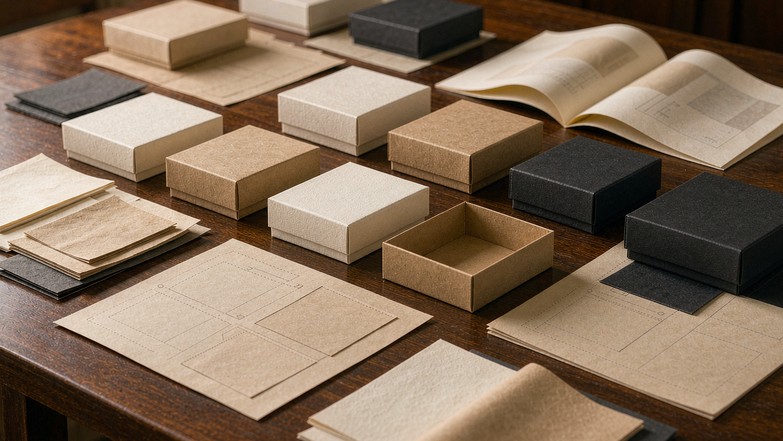
Not every sample is meant to answer the same question. Naming the type prevents a buyer from approving the wrong thing.
| Sample type | What it can prove | What it cannot prove |
|---|---|---|
| Stock sample | The factory’s general build quality and finish range | Anything about your size, artwork or insert |
| White dummy (blank structure) | Dimensions, lid clearance, opening feel, assembly | Color, print, foil or artwork placement |
| Digital or 3D mockup | Layout and panel order at speed | Color on real paper, tolerance, fit, surface feel |
| Printed pre-production sample | Color, finish, registration, structure together | Whether it represents a whole production run |
| Production-grade sample | What the line will actually make, including materials | Nothing by itself; still needs 3 to 5 pieces for variation |
Two practical rules follow. First, ask for 3 to 5 pieces of the final sample, not one. A single perfect piece tells you nothing about variation across a run, and variation is what later becomes a dispute. Second, a 3D mockup is a communication tool, not an approval tool. It is useful early and risky at the end.
What to check on a fragile cultural product
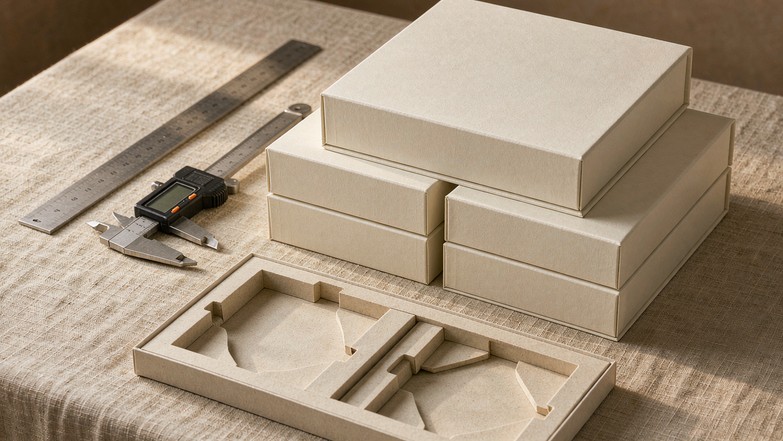
A breakable, oddly shaped item adds checks that a standard cosmetic box does not need. Put the real product inside the sample, then work through fit and removal before you look at color. Lift the item out the way a customer would. If it binds, tips, or needs two hands and a twist, the cavity needs a change. Check that the widest point and any protrusion are supported, and that the item cannot touch the box wall.
Then run the packed sample through a drop and transit check. Recognized procedures are published by ISTA, and the acceptance line you write should name the standard, the sequence and what counts as a pass.
Our own lines run in-house drop, moisture and transit checks and keep the records, so the sample stage is where we agree on that line together. The drop test requirements for packaging suppliers shows how to turn it into purchase order wording.
For a cultural motif, check two more things on the real substrate. A pattern that crosses several panels needs its registration checked across the fold, not just on the front. A spot color or foil needs to be signed off on the actual textured paper, because the same ink reads differently on a smooth coated sheet. If the insert material is still open, the molded pulp vs foam inserts cost comparison compares fit, tooling and unit price.
Scope and responsibilities: who signs, who records, who tests
A sign-off is useful only when the responsibility behind it is clear. Four boundaries keep it that way, and none of them is a reason to turn a project away.
- The brand signs the artwork and the visual reference. We supply the dieline, the preflight feedback and the measured sample card, so the decision is made against evidence rather than a description.
- QA signs the functional record. We run in-house drop, moisture and transit checks and keep the results, but we do not issue third-party certificates ourselves. When a buyer needs a formal report, we prepare the samples and the test specification, and an independent laboratory issues it. That is a division of signing authority, not a gap in testing.
- The buyer names the target market and the documents required there. We build to that specification and supply FSC chain-of-custody papers where required, which can be checked through FSC. We do not sign off legal compliance for your market; final confirmation stays with your brand or your local adviser.
- We design the box structure, not your product. Co-packing, filling boxes with goods, and shipping single parcels to end customers belong to a separate partner.
None of these boundaries changes whether your order is 100 boxes or 10,000. The gate sequence is the same on every run. Our quality system is ISO 9001 with a defect rate below 0.5%, and a first article inspection at the start of production links the golden sample to the first boxes off the line. That record chain is what makes a later question answerable.
Where sampling sits in the delivery clock
Sampling takes 3 days on our side, and mass production takes 10 to 15 days from confirmed artwork and sample sign-off. The start point matters more than the number. A promise that starts at deposit is not comparable with one that starts after the golden sample is signed, so put the start condition in writing using the custom gift box RFQ checklist.
Three items belong in the same document. State how many sample rounds are included and what a further round costs. State whether the sample fee is credited against production, which the rigid gift box MOQ and tooling cost guide explains alongside the other one-time charges. State who owns a rework cost when a change comes from the buyer’s artwork rather than from a factory error.
Most of that can be settled before the first sample is even cut by sending a complete brief for custom boxes.
Conclusion: the sign-off that protects both sides
A packaging supplier sampling and approval process is not paperwork. It is the point where a design becomes something a factory can repeat, and where a buyer gets a reference to hold the run against. In our case, the three failures were all found in the sample stage, which is exactly where they should be found.
Take four steps into your next project. Name the sample type you are approving. Ask for 3 to 5 pieces of the final sample. Sign a golden sample on both sides with a version number. Write the start condition of the lead time next to that signature. Then production has a reference, and a disagreement has an answer.
Send your product dimensions, quantity plan and artwork version through our cultural and creative products and home furnishings packaging page. We will return a sample approval checklist with the four gates, the checks for your product type, and a physical sample in 3 days.
What is a golden sample in packaging?
A golden sample is the agreed physical reference that both the buyer and the factory keep. It is sealed, dated and linked to a version number, and production is checked against it. If a dispute arises about color, fit or finish, the golden sample is the evidence both sides already accepted.
Can a digital proof replace a physical sample?
No. A digital proof settles layout, text and dieline position, but not color on the real paper, lid tolerance, insert fit or removal path. Use it at gate 1 and keep a physical pre-production sample at gate 2. A 3D mockup is a communication tool, not an approval tool.
How many samples should I approve?
Ask for 3 to 5 pieces of the final production-grade sample. One perfect piece cannot show variation across a run, and variation is what later turns into a quality dispute. Check all pieces against the same sample card and record any spread in measurement or color.
Who should sign off on a packaging sample?
Use different owners for different gates. Brand and prepress sign the artwork, operations and the brand sign the physical sample, QA signs the functional and test record, and both parties sign the golden sample. One person approving all four removes the independent check.
What should a sample approval record include?
It should include box dimensions and structure, material types and thickness, artwork and color references, finishing requirements, insert dimensions and product position, the acceptance criteria, and the version number. Any change after approval gets a new version and a new sign-off.
How long does sampling take before production?
Our sampling takes 3 days and mass production takes 10 to 15 days from confirmed artwork and sample sign-off. Agree in writing what starts that clock, how many sample rounds are included, and whether the sample fee is credited against production.