Knowing how to brief a packaging manufacturer for custom boxes decides how accurate your first quote will be. A vague brief produces a vague price, then a long email chain, then a sample that has to be made twice. The short answer: send one written spec sheet with product dimensions, weight, quantity tiers, target market, shipping method and acceptance criteria before anyone starts drawing. This guide shows that sheet field by field, using one launch that went wrong for a predictable reason.
Contents
- The case: eleven questions before anyone could quote
- Design brief versus manufacturing brief
- How to brief a packaging manufacturer for custom boxes: the spec sheet
- The engineering fields a design brief leaves out
- Cultural motifs, label content and multi-SKU variants
- Scope and responsibilities: what a brief fixes and what it does not
- Rework, revisions and who pays
- Conclusion: one brief, one quote, one sample
The case: eleven questions before anyone could quote
A home fragrance brand sends a one-page brief for three ceramic diffuser gift boxes. It says “premium rigid box, gold foil, eco-friendly paper, three artworks, launch in eight weeks”. Eleven questions come back: exact product dimensions including the neck, weight, whether the item is breakable, insert preference, target market, retail or parcel shipping, quantity per version, acceptable damage rate, who signs the sample, required documents, and the delivery date that starts the clock. This is a composite of common sourcing situations, not a named customer or a reported result.
None of those questions is pedantic. Each one changes either the structure or the price. The brand spent nine days answering them one at a time, and the launch date moved. A single written sheet would have cost an hour. The fields below are what our cultural and creative products and home furnishings packaging team asks for before quoting a breakable product.
Design brief versus manufacturing brief
A design brief describes how the box should look and feel. A manufacturing brief describes what the factory must make, from what, to what tolerance, and how it will be judged. Both are needed, but they are not the same document, and sending only the first one is the most common cause of a quote that later changes.
The difference shows up in three places. A design brief says “warm textured paper”; a manufacturing brief names the wrap, the board thickness and the finish. A design brief says “the product sits snugly”; a manufacturing brief gives the product drawing, the widest point, the weight and the insert cavity tolerance. A design brief says “premium”; a manufacturing brief states an acceptable defect rate and the test the packed box must pass.
Send the same brief to your designer and your factory. The fields that belong in a written request are the same ones the custom gift box RFQ checklist uses, so the brief and the quote stay aligned instead of growing into two different documents.
How to brief a packaging manufacturer for custom boxes: the spec sheet
The sheet below is the minimum that lets a factory quote without guessing. Copy it, fill every line, and write “to be advised by supplier” where you genuinely want a recommendation. A blank line is what creates a question later.
| Field | What to write | Why the factory needs it |
|---|---|---|
| 1. Project and versions | Launch or rebrand, number of SKUs, what differs per version | Sets whether artwork versions share one dieline |
| 2. Product drawing | External dimensions including handles, spouts and protrusions, plus weight | Drives cavity, board strength and insert design |
| 3. Fragility note | Breakable or not, fragile points, acceptable damage rate in transit | Decides cushioning and the test acceptance line |
| 4. Structure | Preferred box style, or “to be advised” | Sets tooling and assembly steps |
| 5. Materials and finish | Board thickness, wrap, lamination, foil, embossing, spot UV | Drives material cost and plate or die count |
| 6. Quantities | First run per version, forecast, reorder frequency | Sets MOQ behavior and print method |
| 7. Target market | Country of sale and the documents required there | Sets which compliance evidence to prepare |
| 8. Distribution | Retail shelf, parcel, or both; shipping mode | Decides outer carton, drop sequence and dimensional weight |
| 9. Label content | Barcodes, legal copy, variable data, per panel | Decides space and whether a label or printed version is used |
| 10. Timeline | In-hand date, launch date, approval turnaround | Sets the lead time start point |
| 11. Acceptance | Defect rate, color reference, test standard, who signs | Gives both sides a pass or fail rule |
| 12. Contacts | Artwork approver, sample approver, QA contact | Prevents an unsigned approval |
3.1 Fill the fields you are tempted to leave blank
Three fields are most often skipped, and each one causes a specific problem. Dimensions without protrusions produce a cavity that fits the body but not the handle. A missing distribution channel produces a box that looks right on a shelf and fails in a parcel network. A missing acceptance line means a dispute later has no reference point. If you do not know a value, say so and ask for a recommendation; that is still better than silence.
3.2 Keep one version number
Every change to the sheet gets a new version number and a date. Send the version, not a fresh email with a few edited lines. A factory quoting version 3 while a designer is working on version 5 is a common and entirely avoidable source of rework. The same version number should follow the artwork, the sample card and the purchase order.
The engineering fields a design brief leaves out
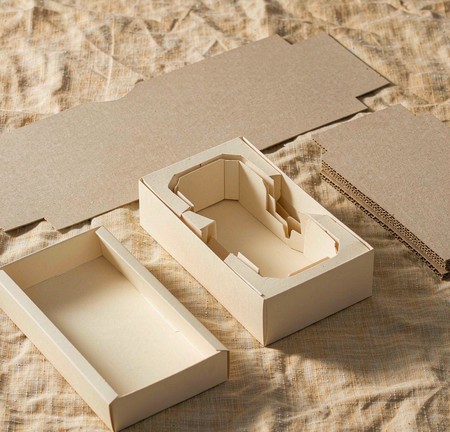
For a heavy, breakable cultural product, four engineering fields decide more than any aesthetic choice. The widest point and any protrusion set the cavity. The weight sets the board and the insert strength. The shipping method sets the drop and transit sequence. The acceptable damage rate sets the pass condition of that test.
Write fragility as a number rather than an adjective. “Handle with care” cannot be tested, while “no visible cracks and no more than 0.5% damage across a shipment” can. Add the removal path too: describe how a customer lifts the item out, because a cavity that holds a diffuser perfectly can still trap its neck. If the structure is still open, the magnetic closure vs drawer box sourcing guide compares two common options on fit, cost and lead time.
Insert choice belongs in the same section, because it changes both tooling and MOQ. The molded pulp vs foam inserts cost comparison breaks down those charges. Note the order quantity per version as well; a brief that lists 300 boxes total but three different insert cavities is really three small runs, not one.
Cultural motifs, label content and multi-SKU variants
A cultural pattern needs two notes that a standard brief does not carry. First, state who owns the artwork and whether the motif is cleared for commercial use in the target market. Second, say where the pattern crosses panels or folds, because registration across a fold has to be checked on a physical sample, not only on a flat artwork file. A spot color or foil should be signed off on the actual textured wrap, which is one reason to name the material early; our art paper luxury boxes page shows the range of wraps that behave differently under foil.
List mandatory label content panel by panel, including barcodes and variable data. Follow GS1 barcode standards so each version scans correctly, and state whether a lot code or date is printed or applied as a label.
If a certification mark is required, name it and note that chain-of-custody documents can be checked through FSC where FSC is specified.
For several versions, add a variant table: one row per SKU with artwork file name, insert cavity, label content and quantity. If the outer box is shared, say so explicitly. That single line can turn three separate MOQs into one, and it is the most useful sentence in a multi-SKU brief.
Scope and responsibilities: what a brief fixes and what it does not
A good brief fixes the specification. It does not move every decision to the factory, and it does not move every decision to the buyer. Four boundaries keep the split clear, and none of them is a reason to turn a project away.
- You own the product information, the artwork and the label content. We check that the artwork fits the dieline and give preflight feedback before anything is plated, so a problem is found while it is still a file.
- You name the target market and the documents required there. We build to that specification and supply FSC chain-of-custody papers where required. We do not sign off legal compliance for your market; final confirmation stays with your brand or your local adviser.
- Product design and order fulfilment sit with your side or a logistics partner. Our part ends when the empty boxes leave the line, and we coordinate the packing specification with whoever fills them.
- Where you ask for a recommendation, we give one with the reason and the cost effect, and you make the call. A brief full of “to be advised” fields is still workable, as long as the decision owner is named.
None of these boundaries changes whether your order is 100 boxes or 10,000. The same sheet works for a trial and for a production run. We have made rigid and folding gift boxes for 25 years, and the projects that run smoothest are the ones where the buyer writes down the acceptance rule before the first sample is cut.
Rework, revisions and who pays
Rework is where a weak brief becomes expensive. Three rules make it manageable. First, state how many artwork revisions and sample rounds are included, and what a further round costs. Second, separate a buyer-driven change from a factory error in writing, because they have different owners. Third, record the version number of every file that goes to the line.
Cost follows the same logic as tooling. The rigid gift box MOQ and tooling cost guide explains why a new foil die or a new plate set is a different charge from a simple artwork edit. A brief that already names the finish, the version count and the acceptance rule lets the factory show those charges before they happen, not after.
Our sampling takes 3 days and mass production takes 10 to 15 days from confirmed artwork and sample sign-off. The clock starts at that sign-off, so a complete brief protects the launch date as much as it protects the price.
Conclusion: one brief, one quote, one sample
Learning how to brief a packaging manufacturer for custom boxes is mostly a discipline of writing things down. In our case, eleven questions were answerable from one sheet, and the nine days spent answering them one at a time were the only real delay in the project.
Take four steps into your next launch. Fill all twelve fields, using “to be advised” where you want a recommendation. Add the engineering fields for weight, protrusions, shipping method and acceptable damage. Attach a variant table for every SKU. Give the whole sheet one version number and send it to your designer and your factory at the same time. Then the quote, the sample and the purchase order all refer to the same document.
Send your product dimensions, quantity tiers and number of artwork versions through our cultural and creative products and home furnishings packaging page. We will return a completed spec sheet with our structural recommendations, flag the fields that still need a decision, and produce a physical sample in 3 days.
What should a packaging manufacturer brief include?
It should include twelve fields: project and versions, product drawing with protrusions and weight, fragility note, structure, materials and finish, quantities, target market, distribution channel, label content, timeline, acceptance criteria, and approval contacts. Write “to be advised by supplier” where you want a recommendation rather than leaving a line blank.
What is the difference between a design brief and a manufacturing brief?
A design brief describes look and feel. A manufacturing brief states what the factory must make, from what material, to what tolerance, and how it will be judged. Send the same document to your designer and your factory so the artwork and the quote refer to one specification.
How do I describe a fragile product to a box factory?
Give the product drawing with the widest point and any protrusion, the weight, the fragile points, the shipping method and an acceptable damage rate as a number. Add how the customer lifts the item out of the box. Those fields let the factory size the cavity and set a testable pass condition.
Can several SKUs share one brief and one MOQ?
Yes, if the outer box, dieline and insert cavity are shared. Add a variant table with one row per SKU for artwork file, label content and quantity, and state that the outer box is common. Version differences can then move to a label or belly band instead of a new plate set.
Who pays when a sample has to be remade?
Agree before sampling starts. State how many sample rounds are included, what a further round costs, and separate a buyer-driven artwork change from a factory error. Put the rule in the brief along with the version number of every file sent to the line.
When should I send the brief?
Send it before design work starts, and to both the designer and the factory at the same time. The usual sequence is brief, then structural dieline and production spec, then artwork, then preflight and sample. A brief written after design has begun usually means rework.