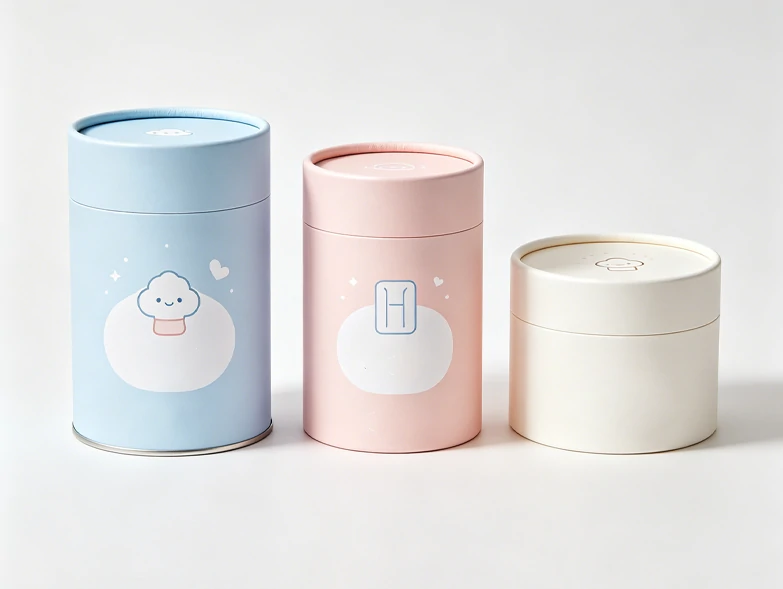
Baby and maternity packaging has to do two jobs at the same time: it must protect the product through long overseas shipping, and it must meet strict safety rules for items that sit close to a child’s skin, mouth, or food. Choose the wrong material and you risk recalls, customs delays, and angry parents. Choose the wrong structure and your product arrives damaged or looks cheap on the shelf.
Short answer: lead with the contact risk. If the package touches food or skin, use a food-grade SBS carton or a certified liner. If it does not, kraft folding cartons cut cost while keeping an eco look. Then match the structure to the product type, verify CPSIA / EN 71 / FDA / FSC compliance, and choose a supplier who can prove all of it with documents and fast samples.
This pillar guide walks through the full decision path for B2B buyers. For deeper dives, jump to our specialized guides on baby food packaging boxes, baby skincare packaging boxes, baby gift boxes, and baby clothing packaging.
What You Will Learn
- What Is Baby & Maternity Packaging?
- Why Packaging Safety Matters More Than for General Retail
- Material Options and Safety
- Structure Selection by Product Type
- Compliance You Must Check Before Import
- How to Choose a Baby Packaging Supplier
- A Simple Decision Framework
- Common Buyer Mistakes to Avoid
- Conclusion
- Frequently Asked Questions
1. What Is Baby & Maternity Packaging?
Baby & maternity packaging is the family of boxes, cartons, tubes, and inserts made to hold products for infants, newborns, and new mothers. It covers formula and puree, lotion, onesies, teethers, and gift sets. It spans three sub-groups: consumables (food, skincare), soft goods (clothing, bibs, blankets), and hard goods (bottles, toys, monitors).
What Makes It Different from General Retail Packaging
Three things set this category apart. First, the end user cannot inspect or complain precisely: parents judge safety from visual cues like clean print, sturdy board, and certified labels. Second, the regulatory bar is higher: children’s products carry lead limits, phthalate bans, and tracking-label rules that general retail never sees. Third, gifting is a major use case, so the same box may need to work as both retail shelf packaging and a premium keepsake.
Who This Guide Is For
It is written for brand-side buyers, product managers, and packaging engineers sourcing paper-based boxes from manufacturers, especially those buying from Asia for the US, EU, or Middle East markets. If you are comparing rigid boxes vs folding cartons for other categories, our Custom Packaging Selection Guide covers the cross-industry decision framework.
2. Why Packaging Safety Matters More Than for General Retail
Pregnancy and early infancy raise sensitivity to chemicals. Regulators treat items that a child can mouth or that touch infant food with far stricter limits. A 2023 EU SCCS review flagged certain printing inks as a migration risk on articles handled by children, and US CPSIA enforcement continues to produce recalls over lead content and phthalates in child-care articles.
For a packaging buyer, the risks are concrete: a non-compliant ink can block customs clearance, a high lead result can force a full recall, and a flimsy carton that arrives crushed destroys launch reviews. Safe packaging therefore protects the user and the brand at the same time. It is a sourcing decision, not a print detail.
3. Material Options and Safety
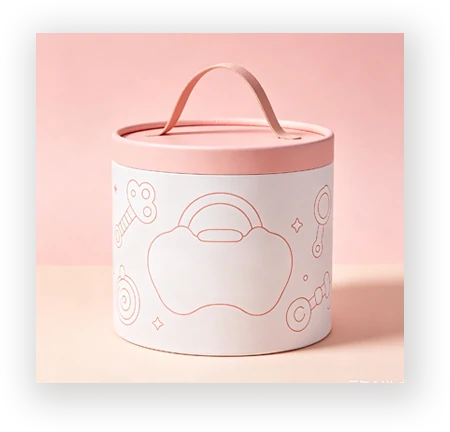
Most baby and maternity boxes use one of four board families. The table below compares them on the factors that actually decide a purchase order: contact safety, print quality, cost, and export fit.
| Material | Strength | Limit | Best for |
|---|---|---|---|
| Kraft paper / board | Recyclable, low cost, natural look | Not food-contact by itself; rougher print | Outer boxes, gift sleeves, clothing |
| Coated SBS board | Smooth print, food-grade grades, crisp color | Costs more than kraft | Food, skincare, premium retail |
| Corrugated (E/B flute) | Strong, ships flat, protects in transit | Bulky; printing needs liner or litho | Shipping cartons, multi-item sets |
| FSC-certified board | Proves responsible fiber sourcing | Requires chain-of-custody paperwork | All export markets, eco claims |
Ink and Coating Safety
Board choice is only half of material safety. Soy-based or low-migration inks are the safe default for baby packaging because they minimize chemical transfer to food or skin. Avoid laminates and coatings with unverified composition; a soft-touch coat, for example, must be child-safe and low-VOC. Ask your supplier for ink composition sheets and third-party test reports, not just verbal assurances.
Food-Contact vs Non-Contact Boxes
Rule: use food-grade SBS or a certified liner whenever the package touches food or skin; use kraft for outer or non-contact boxes where cost and eco look lead. A kraft box around an inner food-grade bag is a common, compliant pattern for formula and snacks. It keeps the eco look while the liner carries the food-contact duty.
4. Structure Selection by Product Type
Structure decides protection, shelf presentation, and freight cost. The table below maps the six main baby product categories to the structure we recommend most often, and why.
| Product | Recommended structure | Why |
|---|---|---|
| Baby food | Folding carton + food-grade liner / window | Protects, shows content, meets FDA |
| Baby skincare | Rigid or folding carton, soft-touch | Premium feel, low allergen |
| Baby gift | Rigid box / drawer box | Unboxing, keepsake value |
| Baby clothing | Folding carton, kraft | Flat-pack, low landed cost |
| Baby toy | Window box (clear PET) | Visibility, child-safe edges |
| Baby bottle | Carton + molded insert | Protects shape, groups parts |
The Flat-Pack vs Rigid Trade-Off
Flat-packed folding cartons cut freight cost dramatically. One 40ft container holds far more flat cartons than rigid boxes, which lowers your per-unit landed cost. Rigid boxes win where the unboxing moment drives sales, such as newborn gift sets. A practical middle path: rigid box for the hero SKU, folding carton for the volume line.
Inserts and Windows
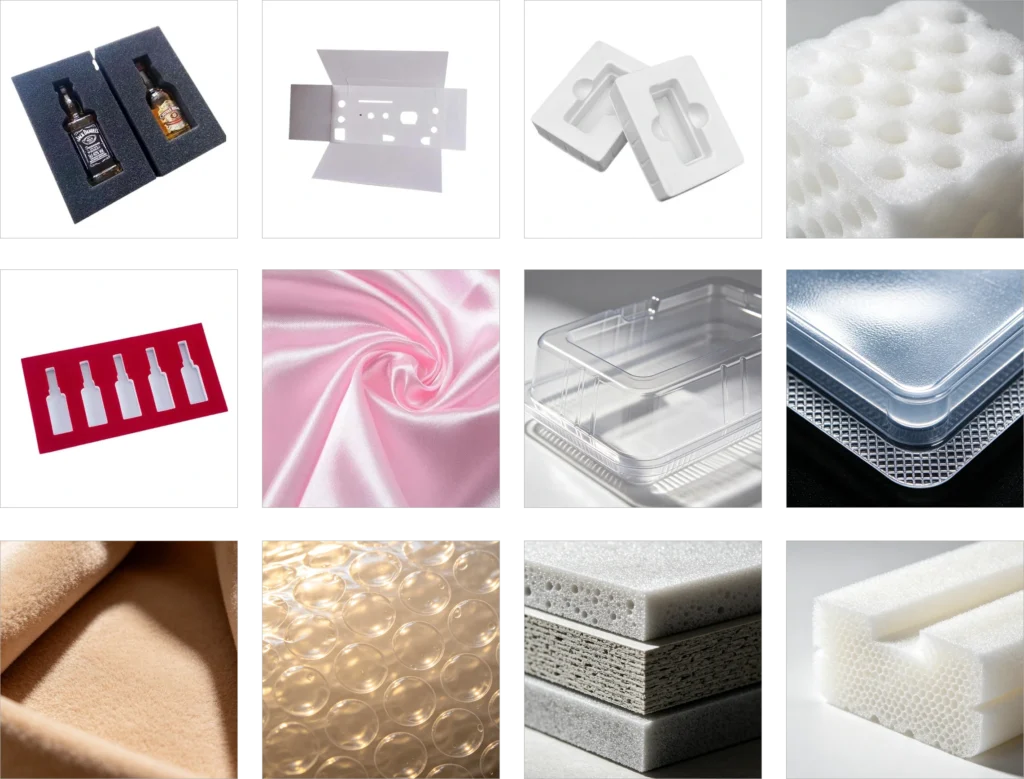
Molded pulp or EVA-free inserts keep bottles, teethers, and monitors from moving in transit. Windows made of food-safe PET lift conversion for food and toys because parents can see the product without opening the seal. Keep ink away from window edges so it never bridges to the product.
5. Compliance You Must Check Before Import
Compliance is where baby packaging differs most from other categories. Verify each of the following with documents, and keep them on file for customs and retailer audits:
- CPSIA (US): lead ≤100 ppm total, banned phthalates in child-care articles, and a tracking label on the package.
- EN 71 (EU): mechanical safety, migration of elements, and flammability for toys and toy-adjacent items.
- FDA 21 CFR (US): food-contact compliant materials for anything near infant food.
- FSC: chain-of-custody certification when you claim responsible fiber.
- Printing: soy or low-migration ink; no lead, no phthalates in inks, adhesives, or coatings.
A capable factory supplies these documents on request. If a supplier hesitates or offers only verbal assurance, treat that as a red flag. The paperwork is the product in this category.
6. How to Choose a Baby Packaging Supplier
Use the same five-lens evaluation you would apply to any packaging partner, weighted for compliance:
- Track record of 25+ years in paper packaging export, with baby-category references.
- ISO 9001 quality system and a defect rate below 0.5% across four QC stages.
- In-house printing so ink composition stays under one roof’s control.
- 3-day physical samples and 10–15 day mass production lead time.
- Compliance documents (CPSIA / EN 71 / FDA / FSC) provided without pushback.
- Low-MOQ option so you can pilot a SKU before committing to volume.
Think in Landed Cost, Not Unit Price
A cheap unit price can hide cost in freight (bulky rigid boxes), rejects (no QC), and delays (no export team). Compare suppliers on landed cost per sellable unit: factory price plus freight, duties, and an allowance for defects and delays. Our team quotes on this basis for custom baby boxes.
7. A Simple Decision Framework
Use these rules when you are stuck between options:
- Choose SBS food-grade carton when the product touches food or skin.
- Choose kraft folding carton when cost and eco look lead and the box is non-contact.
- Choose rigid box when unboxing and protection matter most, such as gift sets.
- Add a window when visibility drives conversion; skip it when it complicates food contact.
- Choose the supplier with documents, not just the lowest quote.
8. Common Buyer Mistakes to Avoid
- Specifying only dimensions and art, but no contact-risk class, then discovering the ink fails migration tests.
- Ordering rigid boxes for the whole line and paying freight for air.
- Accepting verbal compliance claims without test reports on file.
- Skipping the physical sample to save 3 days, then retooling the die after mass production.
- Ignoring the tracking-label requirement for US children’s products.
9. Conclusion
Safe baby packaging starts from contact risk, then structure, then supplier proof. Set the material by what the box touches, set the structure by how the product sells and ships, and set the supplier by documented compliance. The guides below go deeper on each product type: food, skincare, gift, clothing, toy, bottle & feeding, non-toxic materials, and choosing a manufacturer.
Frequently Asked Questions
What makes baby packaging non-toxic?
Soy or low-migration ink, no lead or phthalates in inks and coatings, and a food-grade liner when the box touches food or skin.
Is kraft paper safe for baby food?
Kraft is safe for outer boxes, but food needs a food-grade SBS carton or certified liner inside.
Do I need CPSIA for all baby products?
In the US, CPSIA applies to children’s products: lead limits, phthalate bans, and a tracking label.
What is EN 71?
EN 71 is the EU safety standard for toys, covering mechanical safety, migration of elements, and flammability.
Can a China factory meet US or EU rules?
Yes. A capable factory supplies compliance documents (CPSIA/EN 71/FDA/FSC) and uses approved materials.
How fast can I get samples?
A typical physical sample takes about 3 days before mass production confirmation.
What MOQ is typical for custom baby boxes?
It varies by structure; many factories offer low-MOQ options for small custom runs. Ask for a quote.
Need safe, compliant baby or maternity packaging? Our team can supply food-grade, low-allergen boxes with 3-day samples and a landed-cost quote. Request a sample or quote to discuss your product and market.