Most jewelry brands lose margin or miss launch dates not because they chose the wrong box, but because they treated material, budget tier, and lead time as three separate purchases. Our Custom Packaging Selection Guide covers the full material, structure, and supplier decision process. The complete guide to custom jewelry packaging treats material selection, price-tier strategy, and production timeline as one connected procurement system: pick a rigid structural core matched to the product, graduate that structure to the product’s retail value, and lock specifications early enough that a 10–15 day bulk run finishes before the campaign. Done together, the three decisions protect both perceived quality and profit margin. For the full product catalog behind these structures, see our jewelry and luxury goods packaging solutions.

Table of Contents
- 1. Why Jewelry Packaging Decisions Must Be Connected
- 2. Choosing the Right Jewelry Box Material
- 3. Matching Packaging to Product Price Points
- 4. Understanding the Production Timeline
- 5. How the Three Pillars Work Together
- 6. Common Procurement Mistakes
- 7. Why Choose Yongjian
- 8. Pre-Launch Packaging Checklist
- 9. Conclusion
- 10. Frequently Asked Questions
1. Why Jewelry Packaging Decisions Must Be Connected
A typical emerging brand approaches packaging in the wrong order: it buys a box, then asks what material it is, then asks how long it takes. That sequence guarantees one of two failures — either the material is too cheap for the jewelry inside (eroding trust the moment the lid opens), or the structure is over-built for an affordable SKU (destroying the margin the product was supposed to earn).
The fix is to plan the three decisions as a chain, not a checklist. The material system you choose sets the structural ceiling of the box; that ceiling determines which price tier the box can credibly support; and the structural complexity of that choice dictates how long sampling and bulk production will take. When the chain is planned forward — material → tier → timeline — brands avoid both under-protection and over-engineering.
The three pillars of jewelry packaging procurement are:
- Material selection — rigid paperboard core, specialty paper / fabric / PU leather wrapping, and engineered internal inserts.
- Price-tier alignment — matching structural rigidity and finishing to the product’s retail value.
- Production timeline — from 3-day sampling through a 10–15 day bulk manufacturing window.
Each pillar is explored in depth further below. Read this guide first as the map, then drop into the specific section you need.
2. Choosing the Right Jewelry Box Material
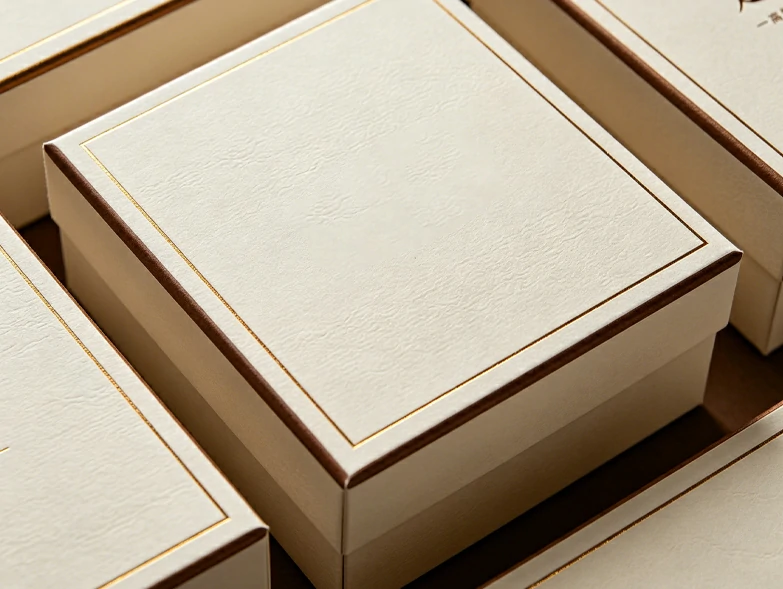
The structural core is the single most important material decision, yet it is the one buyers mention last. For custom jewelry packaging, high-density rigid paperboard (greyboard), typically 1,200–2,500 GSM, is the industry-standard core because it holds crisp 90-degree corners, survives stack pressure in transit, and delivers the heavy “premium” feel of luxury without the freight weight of wood or metal. Everything else — the wrapping and the insert — is engineered around that core. A deeper look at jewelry box material selection walks through the full matrix and the prototyping step that prevents expensive misreads.
2.1 The Three-Layer Material System
A jewelry box is not one material; it is three layers doing three jobs. Skipping any one of them is what produces the “looks fine in a render, fails in the hand” problem.
| Layer | Common Options | What It Controls | Buyer Trap |
| Structural Core | Rigid paperboard 1,200–2,500 GSM | Stability, edge sharpness, premium weight | Using folding carton stock for fine jewelry |
| Exterior Covering | Specialty paper, fabric/velvet, PU leather | Tactile feel, finish compatibility | Choosing a texture that fights foil stamping |
| Internal Insert | Velvet EVA, microfiber, die-cut board | Immobilization, scratch resistance | Generic foam that lets a ring rattle |
2.2 Exterior Covering: Where Brand Feel Is Made
The wrapping is the first physical touchpoint. Specialty textured paper is the most versatile covering because it supports precise Pantone matching and both hot foil stamping and embossing; fabric and velvet signal heritage; PU leather delivers the look and abrasion resistance of genuine leather without the cost or compliance concerns. The constraint most brands miss: heavily textured fabric and some PU leathers cannot accept standard ink printing, so the brand mark must move to foil or deboss — a decision that should be made during material selection, not after the sample arrives.
2.3 Internal Insert: The Part Customers Actually Judge
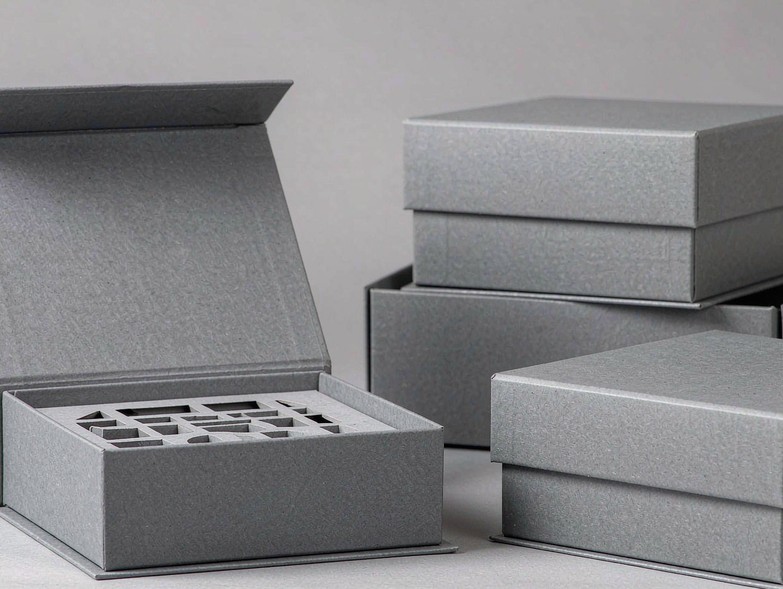
A loose diamond ring that slides inside its cavity reads as “cheap” instantly, regardless of how expensive the outer wrap is. The internal insert — high-density EVA foam lined with velvet or microfiber, die-cut to the exact band or pendant profile — is what actually communicates luxury and prevents micro-abrasions, often more than the exterior. Rings need high-friction slots; necklaces need a rigid velvet backing with rear chain compartments to stop tangling; bracelets and watches need a satin or microfiber pillow that holds shape under crush load.
3. Matching Packaging to Product Price Points
The most expensive box is not the best box. Aligning packaging with product price points requires matching structural rigidity, interior protection, and surface finishing directly to the product’s retail value — so the packaging elevates perceived quality without unnecessarily eroding profit margins. The rule is proportionality: a $30 fashion pendant in a heavy magnetic rigid box has its margin eaten by material and dimensional shipping weight; a $3,000 engagement ring in a folding carton has its trust destroyed at opening. The full value-tier matrix and channel-specific trade-offs are covered in our detailed guide on matching packaging to different price points.
3.1 The Value-Tier Matrix
| Price Tier | Recommended Structure | Insert Strategy | Finishing Strategy |
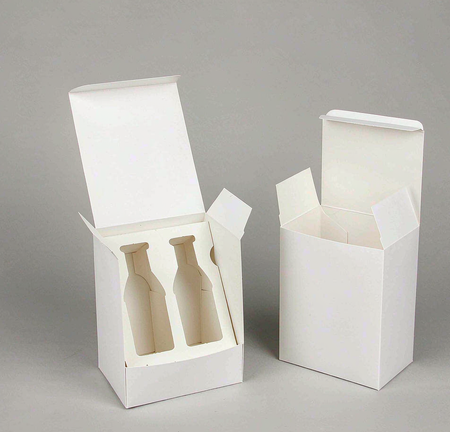
| Fashion ($20–75) | Lightweight folding carton | Standard die-cut board | Clean CMYK branding |
| Mid-Range ($100–500) | Two-piece rigid box (lid & base) | Die-cut foam insert | Moderate foil stamping |
| Fine ($1,000+) | Heavy rigid, magnetic/drawer | Precision velvet EVA | Restrained, precise embossing |
| Luxury / Signature | Hinged/drawer + ribbon pull | Custom fabric-lined cavity | Single, flawless deboss |
3.2 The Restraint Rule
Brands routinely assume that stacking foil, embossing, and texture equals luxury. It does the opposite. In the premium and luxury tiers, restraint projects more value than decoration: a heavy, structurally sound rigid box in subtle matte specialty paper with a single crisp debossed logo outperforms a box covered in competing shiny finishes. Controlling finishing also controls cost — every extra pass through a finishing machine adds both unit price and production days.
4. Understanding the Production Timeline
The best material and tier strategy fails if the box is not on the shelf before the launch. Custom jewelry box production time is not a single number; it is a multi-stage timeline — requirement confirmation, structural sampling, client approval, mass manufacturing, and quality inspection — and the 10–15 day bulk window only starts after the physical sample is approved. Plan from the campaign date backward, not from the purchase order forward. Our breakdown of how long custom jewelry boxes take to produce covers the factors that extend bulk runs and the tactics to compress lead time.
4.1 Stage-by-Stage Reference
| Project Stage | Key Action Items | Yongjian Reference | Delay Risk |
| Requirement Confirmation | Dimensions, structure, material, insert, logo, finish | 1–3 Days | Missing vector artwork, indecision |
| Custom Sample | CAD engineering + physical prototype | 3 Days | Custom molds for complex inserts |
| Sample Approval | Client reviews fit, color, finish | Client-dependent | Mid-sample design changes |
| Bulk Production | Print, die-cut, wrap, finish, assemble | 10–15 Days | Extreme volume, rare paper shortage |
| QC & Shipping | Inline QC, packing, freight | Varies by method | Rework, customs, sea congestion |
4.2 Where Time Is Actually Lost
The bottleneck is almost never the factory floor — it is the sampling loop. By partnering with a manufacturer equipped for rapid prototyping, brands can hold a physical sample in 3 days and remove the single biggest source of delay: approving a structure you have only seen as a render. Repeat orders are dramatically faster because tooling, Pantone profiles, and cutting dies are already archived; the project skips straight to bulk production.
5. How the Three Pillars Work Together
A profitable packaging strategy sequences the decisions rather than balancing them in isolation. The flow below is the operating procedure we recommend to procurement teams:
- Start with the product, not the box. Identify jewelry type, value, and shipping channel before any material is named.
- Engineer the material system. Choose the rigid core, then the wrapping, then the insert that immobilizes the specific piece — the material selection guide details the matching matrix.
- Assign a price tier. Graduate the structure so protection and presentation scale with retail value — see the price-tier guide for the full matrix.
- Lock the spec early. Confirm dimensions and finish, run a 3-day sample, approve, then start the 10–15 day bulk clock — the production timeline guide explains the stages.
When all four steps are followed in order, brands stop over-engineering affordable lines and stop under-protecting high-value pieces. The three deep-dive references linked throughout this page are the working manuals for steps 2–4.
6. Common Procurement Mistakes
The same errors show up repeatedly in failed packaging projects. Each maps to a pillar:
- Material: Approving mass production from a 3D render instead of a physical sample — you cannot judge microfiber softness or foil reflectivity on a screen.
- Tier: Using one “nice box” for every SKU, which either inflates fashion-jewelry freight cost or under-sells fine jewelry.
- Timeline: Starting the clock at purchase order instead of sample approval, then discovering the campaign date is already inside the bulk window.
- System: Treating the three as separate purchases from separate suppliers, which multiplies coordination delay and QC variance.
The single highest-leverage correction is to consolidate the chain with one integrated manufacturer — design, sampling, printing, and assembly under one roof removes the hand-off delays that quietly extend every timeline.
7. Why Choose Yongjian
Dongguan Yongjian Paper Products Co., Ltd. has engineered packaging for global jewelry, fragrance, and luxury brands since 1999 — 25+ years of manufacturing depth. The operation runs from a 15,000 m² Dongguan base with 200+ employees and 150 sets of equipment, including six automatic lines, sixteen paper-tube cutters, five labelers, and ten roll-edge machines. That scale is what makes a 3-day sampling promise and a consistent 10–15 day bulk turnaround credible rather than aspirational.
Buyers get a one-stop foreign-trade path — design → sampling → production → customs → shipping — backed by ISO 9001 quality management and export compliance certifications CE, FDA, and FSC. Low Minimum Order Quantities let a brand test a folding carton for its fashion line and a small batch of premium rigid boxes for a limited collection without committing warehouse space. Defect rate is held below 0.5% through inline QC, which matters precisely because a rework batch is what destroys a launch timeline.
Explore the full range of structures, inserts, and finishing options on our jewelry and luxury goods packaging solutions page, then bring a specific SKU to the engineering team.
8. Pre-Launch Packaging Checklist
Before approving any bulk order, confirm each item against the three pillars:
- Material: Core GSM specified? Wrapping compatible with chosen finish? Insert die-cut to the actual piece?
- Tier: Structure proportional to retail value? Finishing restrained, not stacked?
- Timeline: Sample approved? Bulk 10–15 day window ends before the campaign? Freight method and customs buffer planned?
- Supplier: Integrated manufacturer (design + sampling + production) confirmed? Low MOQ and 3-day sampling available?
9. Conclusion
Custom jewelry packaging succeeds when material, price-tier strategy, and production timeline are planned as one system rather than three isolated buys. Choose a rigid paperboard core wrapped in the right covering with a scratch-resistant insert; graduate that system to match each product’s retail value; and confirm specifications early enough that the bulk run delivers before the launch. The three deep-dive references linked throughout this page give procurement teams the working framework for each decision — use them together to build a packaging strategy that elevates brand perception while defending every margin. For the complete product catalog and structure options, return to our jewelry and luxury goods packaging solutions.
10. Frequently Asked Questions
10.1 Can I use the same packaging material for fashion and fine jewelry?
No. Cheap packaging for fine jewelry destroys consumer trust; heavy luxury structures for affordable pieces destroy margin. Build a tiered system — a folding carton for fashion, a rigid box with a custom insert for fine jewelry — while keeping visual identity consistent.
10.2 What is the single most important jewelry packaging material?
The internal custom insert. A precision-engineered insert (high-density EVA foam lined with velvet) that immobilizes a ring or necklace is what truly communicates luxury and prevents transit damage — often more than the exterior wrapping.
10.3 How early should I start the packaging process before a launch?
Plan backward from your launch date. With 3-day sampling and 10–15 day bulk production, a first-time custom project needs at least 2–3 weeks of buffer for requirement confirmation, sample approval, and shipping — more for seasonal luxury collections.
10.4 Does a faster production timeline mean lower quality?
Not when the manufacturer is integrated. Factories with in-house design, sampling, and automated assembly deliver rapid turnaround with consistent QC. The risk is rushing a fragmented supplier chain, not speed itself.
10.5 Should the packaging link back to a product page?
Yes — a pillar or guide page should point readers to the relevant product/category page so they can move from education to evaluation. For jewelry packaging, the natural destination is the jewelry and luxury goods packaging solutions catalog.
10.6 Can I test a luxury packaging concept before ordering thousands of units?
Yes. Partner with a manufacturer offering rapid prototyping and low MOQ. A physical sample (often within 3 days) lets you test tactile feel and insert fit, and a small batch supports a limited release before full mass production.
Ready to Build Your Jewelry Packaging System?
Bring us one SKU — jewelry type, dimensions, retail price range, and target market — and our engineers will recommend the exact core, wrapping, insert, and finishing, then run a 3-day sample so you can approve before any bulk commitment. Request a custom consultation and sample today.