Choosing between a rigid box and a folding carton is one of the highest-impact packaging decisions an apparel brand makes. This single choice dictates your unit price, dictates how much warehouse space you occupy, and fundamentally alters the consumer’s unboxing experience. Getting this wrong can lead to bleeding margins on shipping “air” or, conversely, cheapening a premium garment with flimsy presentation.
This guide compares rigid box vs folding carton for apparel on the criteria that actually move your landed cost. It provides a practical, sourcing-ready framework for procurement teams and brand owners, deconstructing the true costs, hidden MOQs, and logistical realities of both structures as a companion to our master Apparel Packaging Guide.
Table of Contents
- How the Two Boxes Are Built
- Cost per Unit and the 3x-10x Gap
- The MOQ Inversion Most Buyers Miss
- Logistics: Freight, Storage and the Shipping-Air Problem
- Brand & Unboxing: When Premium Feel Pays Off
- Apparel-Specific Factors
- Decision Framework: Rigid Box vs Folding Carton for Apparel
- Side-by-Side Comparison Table
- Conclusion
1. How the Two Boxes Are Built
The fundamental structural differences between these two box types drive their respective costs, lead times, and logistical requirements.
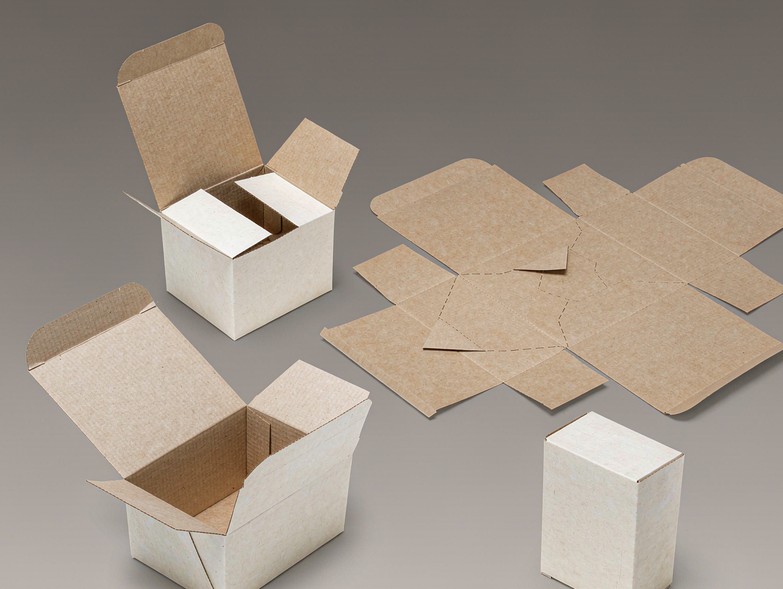
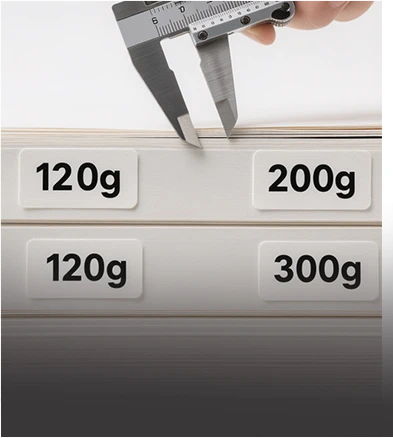
A folding carton is constructed from a single ply of paperboard (typically 250gsm to 400gsm). It is printed, die-cut, and side-glued. Crucially, it ships flat. Assembly occurs at your fulfillment center or factory right before the garment is inserted.
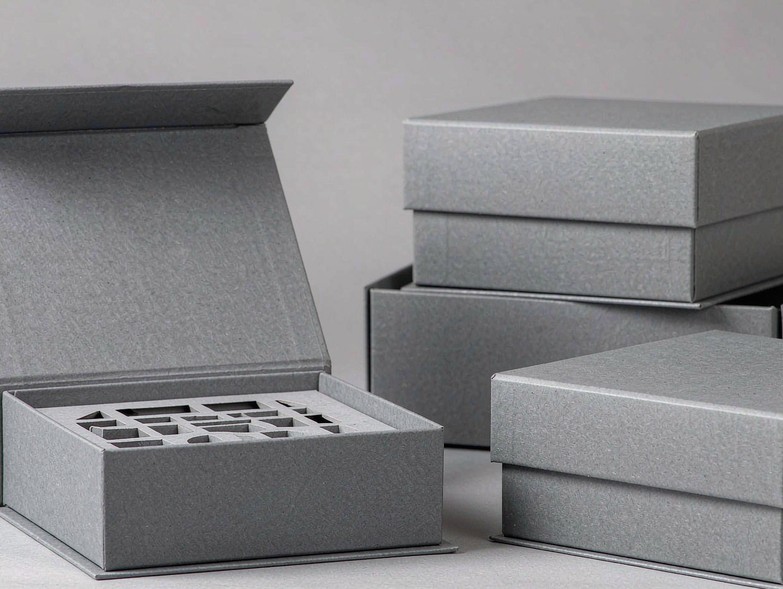
A rigid box (often called a set-up box) is built using a thick, unyielding chipboard core (typically 800gsm to 1500gsm). This raw greyboard is then “wrapped” in a thinner, printed or textured paper. Because of the wrapping process, they require significant manual labor or complex automated machinery. Standard rigid boxes ship fully assembled.
2. Cost per Unit and the 3x-10x Gap
At first glance, the price disparity between the two is stark. For comparable sizes suitable for a folded sweater or high-end dress:
- Folding Carton: Expect factory pricing between $0.20 to $0.80 per unit, depending on volume and finishing.
- Rigid Box: Expect factory pricing between $2.50 to $8.00 per unit.
Why the 3x to 10x gap? It comes down to material volume and labor. A rigid box uses significantly more paperboard by weight. Furthermore, in our experience on our own wrapping lines, labor accounts for roughly 40% to 60% of the cost of a rigid box due to the hand-wrapping and assembly process, whereas folding cartons are produced on high-speed, automated lines. To understand how these unit costs fit into your overall budget, review our comprehensive apparel packaging cost breakdown.
3. The MOQ Inversion Most Buyers Miss
A common misconception is that a cheaper unit price (folding carton) means a lower barrier to entry. In manufacturing, the opposite is true.
- Folding Carton MOQ: Because folding cartons rely on high-speed automated machinery, setup costs (plating, die-making, machine calibration) are high relative to the unit cost — die/tooling alone typically runs $150–$600 per design. Therefore, factories typically require MOQs of 1,000 to 5,000 units for offset-printed retail cartons to amortize those setup costs and make the run economical. (Corrugated shipping cartons, printed by flexo, start lower — commonly 500 to 1,000 units.)
- Rigid Box MOQ: Because rigid boxes involve more manual labor and less high-speed machine setup, they are more viable for short runs. It is entirely feasible to find a manufacturer willing to produce 250 to 500 rigid boxes for a limited-edition capsule collection or a VIP seeding kit.
If you are a startup launching a pilot run of 300 premium hoodies, the “expensive” rigid box might be your only viable custom option unless you want to hold up to 4,700 unused folding cartons in inventory. If you are auditing factories for short-run capabilities, use these apparel packaging manufacturer questions to ensure they actually handle low-MOQ rigid production in-house.
4. Logistics: Freight, Storage and the Shipping-Air Problem
The unit price on your invoice is only part of the story. The landed cost—which includes ocean freight, customs, and warehousing—is where the rigid box vs. folding carton battle is truly won or lost.
The Shipping-Air Problem:
Standard rigid boxes do not collapse. When you ship 5,000 rigid boxes from Asia to the US or EU, you are paying ocean freight primarily to ship empty space (air). This geometric inefficiency typically adds a double-digit percentage — commonly 10% to 25% — to the landed cost of a mid-priced rigid box.
Conversely, folding cartons ship flat. They are incredibly dense when palletized, reducing ocean freight volume (CBM) and warehouse storage requirements by approximately 80% compared to rigid boxes. Either way, the corrugated packaging boxes that serve as master cartons ship flat, so the freight penalty comes from the retail box itself, not the shipper.
A Worked Example — 5,000 Units:
In our experience, the arithmetic gets concrete fast at scale. Five thousand assembled rigid boxes occupy roughly one 20GP container. At recent Asia-to-Europe and Asia-to-US spot rates of a few thousand dollars per 20GP, that freight amortizes to roughly $0.50–$0.80 per box — meaningful on a product priced at $2.50 to $8.00 at the factory gate. Spend the same freight budget on cartons that ship flat and you move about five times the unit count, so the same ocean leg costs roughly $0.10–$0.16 per box. Add customs duty and a few weeks of warehousing on the rigid option’s much larger cube, and a structure chosen for brand reasons can quietly become the most expensive line in your landed cost. Spot rates swing with the market, so confirm current numbers with your forwarder before you model a program — but the ratio between the two structures holds regardless of the rate. That is why we treat freight efficiency as a design input rather than an afterthought.
The Collapsible Rigid Compromise:
If you require the premium feel of a rigid box but cannot justify shipping air, spec a collapsible rigid box (base versions fold flat with adhesive corners; a magnetic closure is a premium option that carries a higher MOQ). While the unit price is slightly higher than a standard rigid box due to the complex die-cutting — and higher again with magnets — they ship flat, cutting ocean freight costs by up to 70%.
5. Brand & Unboxing: When Premium Feel Pays Off
Packaging is a physical proxy for the price tag on the garment.
Rigid Boxes: The sheer weight and unyielding structure of a rigid box signal luxury. The slow reveal—lifting a heavy lid or pulling a drawer—creates friction that forces the consumer to slow down and appreciate the product. If you are selling a $400 cashmere sweater or $600 designer sneakers, the consumer expects the packaging to reflect that investment — which is why luxury packaging boxes in this price band almost always start from a rigid platform. (For footwear specifics, consult our custom shoe box manufacturer guide).
Folding Cartons: These communicate accessibility, speed, and often, sustainability. They are standard for mid-tier retail, fast fashion, and everyday basics (t-shirts, underwear, socks). Attempting to use a lightweight folding carton for a luxury evening gown risks cheapening the brand perception before the garment is even touched. Conversely, over-packaging a $20 t-shirt in a $5 rigid box is a fast way to destroy your margins.

6. Apparel-Specific Factors
Beyond cost and brand, consider the physical realities of the clothing itself.
Sizing and Stackability:
Rigid boxes excel at protecting folded clothing: they stack securely on retail shelves without crushing the garments inside. Folding cartons, if made too large (e.g., for heavy winter coats), can bow or bulge under pressure, looking unsightly on the shelf.
Moisture and Sea Freight:
Apparel is highly susceptible to mold during ocean transit. The thick greyboard of a rigid box can absorb more ambient moisture than a thin folding carton. Regardless of which structure you choose, if you are shipping by sea, you must implement strict desiccant protocols. Learn exactly how to prevent mold in apparel shipping to protect your inventory.
Accessories and Finishing:
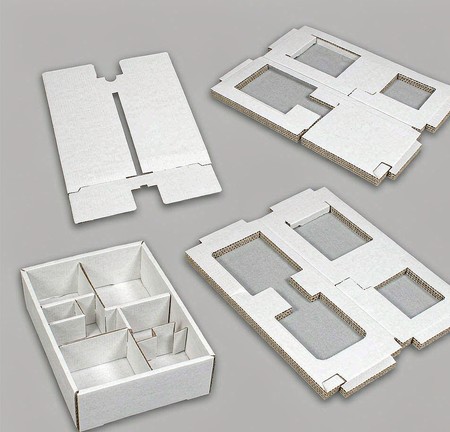
Premium rigid boxes are more likely to utilize custom inserts, acid-free tissue paper (to prevent fabric color migration), and high-end finishes like soft-touch lamination or deep embossing. While folding cartons can be foiled and embossed, their thinner substrate limits the depth of the impression. If you are aiming for high recyclability with either option, cross-reference your design with our eco-friendly apparel packaging supplier checklist to avoid non-recyclable plastics and heavy laminations.
Recyclability and Compliance:
Structure drives end-of-life as much as substrate does. A folding carton’s single-ply paperboard is straightforward for recyclers to pulp, while a rigid box’s chipboard-and-wrap construction — especially with heavy laminations, foils or magnets — can fail recyclability screens. The EU’s Packaging and Packaging Waste Regulation (PPWR) introduces recyclability performance requirements that phase in over the coming years, and the European Commission’s packaging waste overview is the best starting point for the compliance timeline. If you sell into the EU, treat design-for-recycling as a spec requirement, not a marketing claim.
7. Decision Framework: Rigid Box vs Folding Carton for Apparel
Use this simple decision matrix before drafting your RFQ for custom retail packaging boxes:
- Spec a Folding Carton IF:
- The retail price of the garment is under $100.
- Your order volume is high (1,000+ units).
- Minimizing ocean freight and warehouse storage is a top priority.
- The garment is lightweight (tees, lingerie, activewear).
- In the $100–$250 Middle Band: Spec a folding carton with premium surface finishing — soft-touch lamination, foil stamping, deep embossing — to carry a higher price point, or a small-format collapsible rigid box when the garment justifies a rigid feel but the order does not justify assembled-box freight.
- Spec a Standard Rigid Box IF:
- The retail price of the garment is over $250.
- The unboxing experience is a core marketing pillar.
- Your order volume is low (under 1,000 units).
- You are sourcing domestically, or shipping costs are a secondary concern.
- Spec a Collapsible Rigid Box IF:
- You need the luxury feel of a rigid box but must optimize for high-volume ocean freight from overseas.
Once you have made a decision, ensure you communicate your structural requirements clearly using our OEM/ODM apparel packaging brief template.
8. Side-by-Side Comparison Table
The table below summarizes rigid box vs folding carton for apparel on the factors that move landed cost:
| Factor | Rigid Box (Set-Up) | Folding Carton | Winner / Notes |
|---|---|---|---|
| Unit Cost | $2.50 – $8.00+ | $0.20 – $0.80 | Folding Carton (3x-10x cheaper) |
| Typical MOQ | 200 – 500 units | 1,000 – 5,000 units | Rigid Box (Better for short runs) |
| Lead Time | 15-25 working days | 7-15 working days | Folding Carton (Faster automated production) |
| Freight Efficiency | Very Low (Ships assembled) | Very High (Ships flat) | Folding Carton (Or spec a collapsible rigid) |
| Storage Volume | High | Low | Folding Carton (~80% less space) |
| Brand Perception | Premium, Luxury | Standard, Accessible | Rigid Box (Heavier weight signals value) |
| Crush Resistance | High | Medium to High (depends on gsm and structure) | Rigid Box — though 400gsm+ cartons with crash-lock bases close much of the gap |
9. Conclusion
The decision between a rigid box and a folding carton is not merely about aesthetics; it is a fundamental supply chain choice that impacts unit cost, landed logistics, and brand equity. Folding cartons offer unbeatable cost efficiency and logistical density for high-volume, mid-tier apparel. Rigid boxes, while significantly more expensive and space-consuming, provide the structural integrity and premium tactile experience demanded by luxury garments and short-run capsule collections.
If you are unsure which structure optimizes your margins while elevating your brand, our engineering team can help. Contact us to request a side-by-side rigid vs. folding sample quote, or send us the folded dimensions of your garment for a comprehensive box-size and freight-efficiency study.
FAQ
What is the primary material difference between the two?
A folding carton is made from a single sheet of paperboard (like SBS or kraft), usually 250gsm to 400gsm. A rigid box is constructed from a thick, heavy chipboard core (800gsm to 1500gsm) that is then wrapped in a thinner printed paper.
Can folding cartons support heavy garments like winter coats?
Yes, but they require careful engineering. For heavy items, you must spec a thicker paperboard (e.g., 400gsm+), reinforce the base, and perhaps use a crash-lock bottom design to prevent the box from bowing or opening under the weight.
Why is the lead time longer for rigid boxes?
Rigid boxes require more manual labor and a slower assembly process (gluing the wrap to the chipboard core, assembling lids and bases, allowing glue to dry) compared to the high-speed automated die-cutting and gluing of folding cartons.
Are collapsible rigid boxes as strong as standard rigid boxes?
They are very close. When assembled, the adhesive corners and magnetic flaps create a highly sturdy structure. However, they are slightly less crush-resistant than a traditional, non-collapsible set-up box, but the massive savings in freight usually justify the minor trade-off.
Which box type is more eco-friendly?
Both can be highly eco-friendly if made from FSC-certified paper and printed with soy inks. However, folding cartons are generally more sustainable as they use less raw material by weight, generate fewer emissions during ocean transport (because they ship flat), and are easier for the end consumer to break down and recycle.