Folding Cartons vs Rigid Boxes for Daily Necessities: Which Is More Cost-Effective?
For supermarket suppliers and retail brands, selecting the wrong box structure inevitably leads to inflated logistics budgets, wasted warehouse space, and eroded product margins. Explore our Custom Packaging Selection Guide for a full decision framework across packaging types. For high-volume daily necessities, folding cartons are overwhelmingly the more cost-effective choice because their flat-packed logistics and automated production drastically lower total landed costs, whereas rigid boxes are only commercially justified when a premium, gift-oriented presentation offsets their substantial manufacturing and shipping premiums.

Table of Contents
- Calculating Total Packaging Cost for Household Products
- Technical Profile: Folding Cartons for Daily Necessities
- Technical Profile: Rigid Boxes in Retail Packaging
- Cost Comparison Matrix: Folding Carton vs Rigid Box Cost
- Protecting Your Logistics Budget with Flat-Pack Structures
- Closing the Value Gap with Customization and Inserts
- Application Cases for Household Product Packaging Boxes
- Large-Order Reliability for Mass Retail Packaging
1. Calculating Total Packaging Cost for Household Products
When B2B buyers compare custom packaging quotes, looking strictly at the raw price of an empty box is a critical error that obscures the actual financial impact on the supply chain.
To accurately determine which structure is more cost-effective, procurement teams must calculate the total landed cost, which combines the unit box price with freight volume, storage requirements, structural assembly time, and product damage risks.
Folding cartons and rigid boxes solve entirely different packaging problems. For daily necessities, the comparison should not be framed as “Which box is cheaper?” A better procurement question is: “Does the additional cost of a rigid box create enough commercial value to justify its higher packaging and logistics cost?”
For Yongjian’s target market—daily necessity brands, OEM and contract manufacturers, supermarket suppliers, and e-commerce distributors—packaging must scale with product volumes. A packaging format with a higher unit price is not automatically more expensive overall, but for fast-moving consumer goods, the exponential increase in shipping and storage volume associated with rigid structures usually destroys retail profit margins. Understanding how to evaluate the complete packaging lifecycle is essential for true cost-effective packaging for household products.
2. Technical Profile: Folding Cartons for Daily Necessities
Folding cartons represent the backbone of global retail, providing a highly scalable balance between shelf presentation, printing fidelity, and manufacturing throughput.
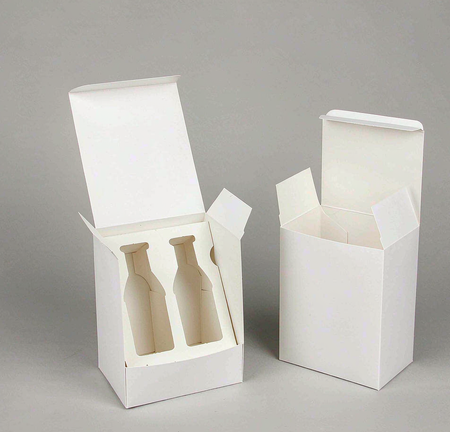
Folding carton packaging utilizes lightweight paperboard that is die-cut, folded, and shipped flat, making it the industry standard for high-volume, cost-effective retail packaging boxes designed to capture attention on supermarket shelves.
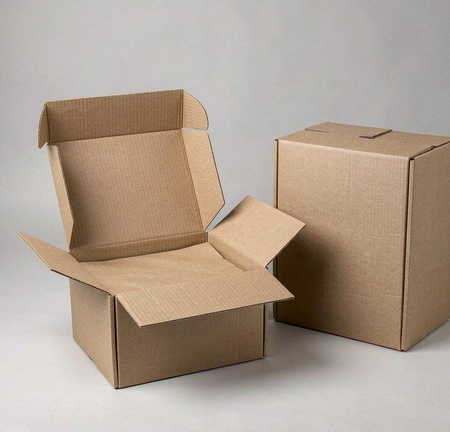
From a structural standpoint, custom folding cartons are highly adaptable. Yongjian manufactures these structures using a variety of materials tailored to the product’s specific needs, including kraft paper, coated paper, corrugated paper, and recycled paper. Because the paperboard is relatively thin and flexible, it moves through high-speed printing presses and automated folder-gluer machines at exceptional speeds.
This makes folding cartons particularly relevant to retail-facing daily necessity products where the package must provide branding, secure shelf presentation, and efficient production without introducing the high structural and labor costs associated with rigid alternatives. For businesses scaling their operations, relying on highly automated daily necessities packaging ensures that packaging supply can effortlessly meet massive retail demand.
3. Technical Profile: Rigid Boxes in Retail Packaging
While folding cartons dominate the supermarket aisles, rigid boxes occupy the premium tier of the packaging industry, primarily serving products that demand an elevated unboxing experience.
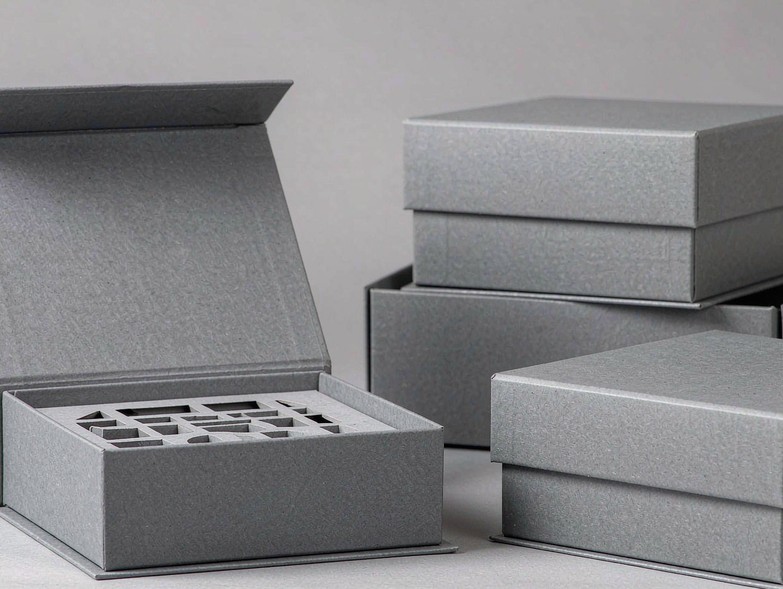
Rigid box packaging is built around a thick, heavy board structure wrapped in printed paper and arrives pre-formed rather than flat-packed, heavily inflating both material consumption and logistics costs.
Current packaging-industry comparisons consistently identify rigid boxes as a premium option. They are structurally more substantial and significantly heavier than folding cartons. Industry benchmarks typically describe rigid boxes as utilizing thick greyboard ranging from 1,200 to 2,500 GSM, whereas folding carton board generally sits between 250 and 450 GSM.
Because they cannot be collapsed, rigid boxes occupy their full three-dimensional volume during shipping and warehousing. For a mainstream consumer product, paying to ship and store empty space makes little economic sense. Therefore, while rigid boxes excel for luxury cosmetics or high-end electronics, they become defensible in the household sector only when the product’s positioning depends heavily on premium gifting or an exceptionally high perceived-value unboxing experience.
4. Cost Comparison Matrix: Folding Carton vs Rigid Box Cost
Procurement teams must evaluate the structural, logistical, and financial trade-offs between these two distinct packaging formats before finalizing a purchasing strategy.
Evaluating folding carton vs rigid box cost requires a side-by-side analysis of material GSM, shipping volume efficiency, production scalability, and suitability for the product’s specific retail channel.
The following data-rich table provides a B2B framework for comparing the technical and commercial attributes of custom folding cartons against market-standard rigid boxes:
| Evaluation Criteria | Custom Folding Cartons | Market-Standard Rigid Boxes |
| Material Construction | 250–450 GSM paperboard (coated, kraft, recycled) | 1,200–2,500 GSM thick greyboard wrapped in paper |
| Shipping & Warehousing | Ships 100% flat; maximizes pallet and warehouse density | Ships pre-assembled (3D); highly inefficient storage |
| Production Throughput | Extremely fast; utilizes automated folder-gluer machines | Slower; requires specialized wrapping and manual assembly |
| Unit Manufacturing Cost | Highly economical; ideal for mass mass-market scaling | Expensive; premium pricing due to materials and heavy labor |
| Primary Retail Channel | Supermarkets, mass retail, high-volume e-commerce | Luxury boutiques, specialty gifting, limited editions |
| Household Application | Cleaning supplies, personal care, mass-market tableware | Premium limited-edition home accessory gift sets |
5. Protecting Your Logistics Budget with Flat-Pack Structures
In global supply chains, international freight rates and dimensional weight charges can quickly eclipse the manufacturing cost of the packaging itself.
One of the most significant cost advantages of folding cartons is their flat-pack efficiency, which slashes dimensional shipping weight and allows brands to heavily optimize their sea freight and warehousing logistics.
Yongjian explicitly highlights high packaging and shipping costs, bulky box structures, and warehousing logistics as some of the most critical challenges for daily necessity brands. Rigid boxes generally do not provide a flat-pack advantage because they arrive in their final assembled shape.
By contrast, Yongjian focuses on space-saving structural engineering and flat-packed packaging optimized to reduce sea freight costs. A customized folding carton may have a lower initial unit cost, but its true commercial power lies in its logistics advantage. Because its flat-packed form uses vastly less shipping and warehouse volume, a brand can pack exponentially more units into a single shipping container, drastically lowering the overall landed cost of their daily necessities packaging.
6. Closing the Value Gap with Customization and Inserts
A common misconception among retail brands is that they must upgrade to an expensive rigid box to achieve a premium, trustworthy, or highly protective retail appearance.
Brands can achieve strong perceived product value and robust protection without the expense of rigid boxes by utilizing advanced printing, custom surface finishes, and secure internal inserts within a folding carton structure.
You do not necessarily have to move to rigid packaging simply to achieve a stronger visual presentation. Value engineering is a much more useful purchasing approach. Yongjian supports deep customization of materials, box structures, printing, and finishing. By utilizing high-resolution offset printing, vibrant flexographic printing, or simple branding designs on coated or kraft paper, a folding carton can command immense shelf appeal.
Furthermore, structural protection does not mandate a thick rigid outer shell. For fragile items, the appropriate commercial decision is often a folding carton paired with an internal insert. Yongjian offers EVA foam, sponge, molded pulp, and paper inserts. This combination provides exceptional shock absorption and product presentation without unnecessarily inflating the outer-box cost.
7. Application Cases for Household Product Packaging Boxes
The most commercially rational packaging choice aligns directly with the product’s specific volume, fragility, and the expectations of its retail channel.
For mass-market cleaning supplies and supermarket retail products, folding cartons are the optimal choice for volume and unit cost, while private-label brands balance brand differentiation with tight margin controls through customized carton designs.
- Daily Cleaning Supplies: For mass-market cleaning products, the commercial priority is usually efficient unit cost, fast production, retail presentation, and scalable supply. This heavily favors folding cartons. Paying for a rigid construction makes little economic sense when the packaging’s main job is high-volume retail containment.
- Tableware and Home Accessories: These products vary significantly in weight and fragility. Rigid packaging should not automatically be viewed as the stronger commercial choice. A folding carton paired with a protective internal insert (like molded pulp) secures the fragile ceramics perfectly while maintaining low logistics costs.
- Personal Care and Scented Products: For handmade soaps and scented candles, a folding carton—especially custom kraft packaging—is highly sufficient for mainstream retail positioning, offering an eco-friendly aesthetic. A rigid box should only be considered if the product is deliberately positioned as a high-margin luxury gift.
- Supermarket and Private-Label Products: Private-label brands must balance brand differentiation against cost control. A rigid box can strengthen perceived value but aggressively increases the overall landed cost. A customized folding carton provides significant branding space while retaining flat-packed logistics advantages, making it the most scalable starting point for retail packaging.
8. Large-Order Reliability for Mass Retail Packaging
When procuring packaging at scale, securing a slightly lower unit price is meaningless if the supplier suffers from high defect rates, inconsistent board quality, or chronic production delays.
For high-volume retail suppliers, large-order reliability is paramount; a manufacturer utilizing standardized automatic machinery guarantees that folding carton quality remains perfectly consistent across massive bulk orders.
B2B procurement triggers are rooted in risk mitigation. A cheaper box is not automatically the lowest-cost solution if it leads to jammed automated packing lines or unsellable retail inventory. Yongjian eliminates these procurement risks through its 25 years of standardized production and an infrastructure boasting 150+ automatic machines.
These capabilities allow Yongjian to maintain a <0.5% stated defect rate, ensuring that the structural integrity of your daily necessities packaging remains flawless. With 3-day sample delivery and a 10–15 day stated production time for massive bulk orders, retail brands can scale their household product lines aggressively, confident that their supply chain is secure and their total landed costs are meticulously optimized.
Conclusion
When evaluating folding cartons vs rigid boxes for daily necessities, the decision must transcend simple unit price comparisons and address the total landed cost of the supply chain. For high-volume daily necessities and retail products, folding cartons are generally the more cost-efficient choice because of their lower material and production requirements, flat-pack logistics advantages, and rapid scalability. Rigid boxes become commercially justified only when premium presentation and perceived product value are important enough to completely offset their higher packaging and logistics costs. By focusing on space-saving structural engineering and value-added custom inserts, brands can achieve exceptional retail presentation without sacrificing their profit margins.
Compare Folding Carton and Rigid Box Costs for Your Product.
Send your product size, quantity and packaging requirements for a custom comparison and let our factory-direct engineering team calculate the most cost-effective packaging structure to lower your total landed costs.
Frequently Asked Questions (FAQ)
1. Why are rigid boxes for daily necessities typically more expensive than folding cartons?
Rigid boxes are constructed from thick, heavy greyboard and require slower, more labor-intensive wrapping and assembly processes. Additionally, because they are shipped fully assembled (3D), they consume vastly more shipping and warehouse space, driving up the total landed cost significantly compared to flat-packed folding cartons.
2. Can folding carton packaging safely hold fragile household products?
Yes. While standard folding cartons are lightweight, they can be engineered with thicker paperboard, reinforced crash-lock bottoms, and specialized internal inserts (like molded pulp, EVA foam, or die-cut paper inserts) to safely secure and protect fragile household goods like glassware or ceramics during transit.
3. Do folding cartons look cheap compared to custom rigid boxes?
Not at all. The perceived value of a folding carton is dictated by its printing and finishing. By utilizing high-resolution offset printing on coated paper, combined with matte laminations, spot UV, or custom branding, a folding carton can achieve a highly premium retail appearance at a fraction of a rigid box’s cost.
4. How does flat-pack engineering reduce my packaging shipping cost?
In global logistics, carriers charge based on volume (dimensional weight). Flat-packed folding cartons allow you to fit tens of thousands of units onto a single standard shipping pallet. This maximizes container density, drastically slashing your international sea freight and domestic warehousing costs.
5. What is the typical production time for custom folding cartons?
For a manufacturer equipped for high-volume production, lead times are highly efficient. Utilizing over 150 automatic machines, production for massive bulk orders can be completed in a stated 10–15 days, following a rapid 3-day sample delivery process.
6. Are custom inserts available for household product packaging boxes?
Yes. To secure multi-piece household products within a folding carton, manufacturers offer a variety of internal inserts, including EVA foam, sponge, molded pulp, and die-cut paper. These inserts hold the product securely in place, matching the protective qualities often associated with rigid boxes.