Procuring packaging from an unverified trading company often leads to hidden markups, distorted technical communication, and severe structural inconsistencies across production batches. For the complete packaging selection framework, see our Custom Packaging Selection Guide. To reduce procurement risks and ensure long-term stability, electronics brands must partner directly with a true electronics packaging manufacturer that possesses complete in-house control over structural engineering, quality inspection, and mass production management.

Table of Contents
- The Strategic Advantage of a Direct Electronics Packaging Manufacturer
- Engineering Capabilities for Custom Electronics Packaging
- Manufacturing Capabilities: From Folding Cartons to Internal Components
- Quality Control Capability and Production Consistency
- Communication Advantages and Reducing Procurement Risks
- Industry Applications: Consumer Brands, OEM, and Accessories
- Establishing Long-Term OEM Packaging Partnerships
1. The Strategic Advantage of a Direct Electronics Packaging Manufacturer
When sourcing custom packaging for consumer electronics, procurement teams face a critical initial decision: should they work directly with a packaging factory or purchase through a third-party trading company? For standard, off-the-shelf packaging, the difference may not always be immediately obvious. However, the electronics industry demands rapid iterations, high-precision fitment, and robust protective structures.
Unlike trading companies that merely coordinate orders between buyers and outsourced facilities, a direct electronics packaging manufacturer controls the entire production process from structural development and prototype creation to quality inspection and mass production management.
Working with a direct packaging manufacturer provides distinct advantages in new product development and communication efficiency. A trading company typically acts as a middleman, passing your engineering files to an undisclosed factory. This opaque supply chain introduces significant risks: prices are inflated with hidden margins, technical feedback is delayed, and if a structural problem arises during mass production, the true manufacturer is shielded from direct accountability. A professional electronics packaging factory eliminates these layers. By dealing directly with the facility executing the printing, die-cutting, and box assembly, brands secure a transparent supply chain where customized requirements are met with rapid, actionable technical solutions.
2. Engineering Capabilities for Custom Electronics Packaging
Electronic products are not uniform. They are constantly evolving, becoming smaller, more complex, and featuring highly sensitive components that require bespoke protection. A supplier that only offers fixed box templates cannot adequately serve the modern electronics market.
A professional electronics packaging factory engineers solutions based on the actual electronic product, optimizing custom box dimensions, developing specialized product fitting structures, and providing precise packaging material recommendations.
Packaging Structure Development
A core competency of a Custom Electronics Packaging Manufacturer is reverse-engineering the packaging from the physical product itself. Rather than forcing a new smart device into a pre-existing box size, the factory’s CAD engineers develop custom box designs tailored to the device’s exact dimensions, center of gravity, and fragility points. This custom packaging production process ensures that the structural design optimization accommodates the main unit and all its accompanying accessories securely.
Material Selection and Prototyping
An expert factory will also provide critical packaging material recommendations. Not every electronic device requires a heavy 3mm rigid board. A direct manufacturer assesses the product’s weight and retail environment to suggest the most cost-effective yet protective materials—whether that involves high-density corrugated board for shipping heavy power supplies or premium coated paperboard for a sleek retail presentation. Before moving to bulk manufacturing, the factory will generate a physical prototype (a white dummy) to test the structural integrity, ensuring all product fitting solutions perform flawlessly under real-world drop testing.
3. Manufacturing Capabilities: From Folding Cartons to Internal Components
The true test of an electronics packaging supplier is their physical manufacturing infrastructure. B2B buyers must evaluate whether the facility can handle the diverse packaging requirements of a comprehensive electronics portfolio.
A capable OEM electronics packaging factory possesses the machinery to execute complete custom packaging production, including the manufacturing of lightweight folding cartons, luxury rigid boxes, high-quality custom printed packaging, and complex internal protective structures.
Custom Box Production
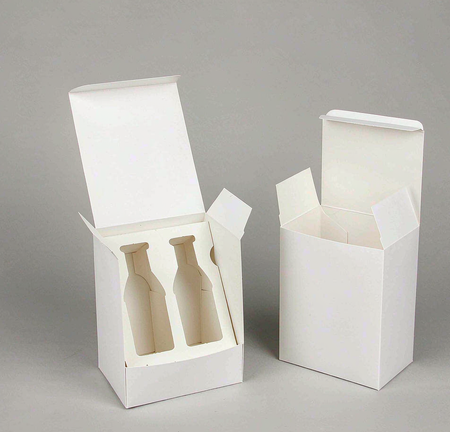
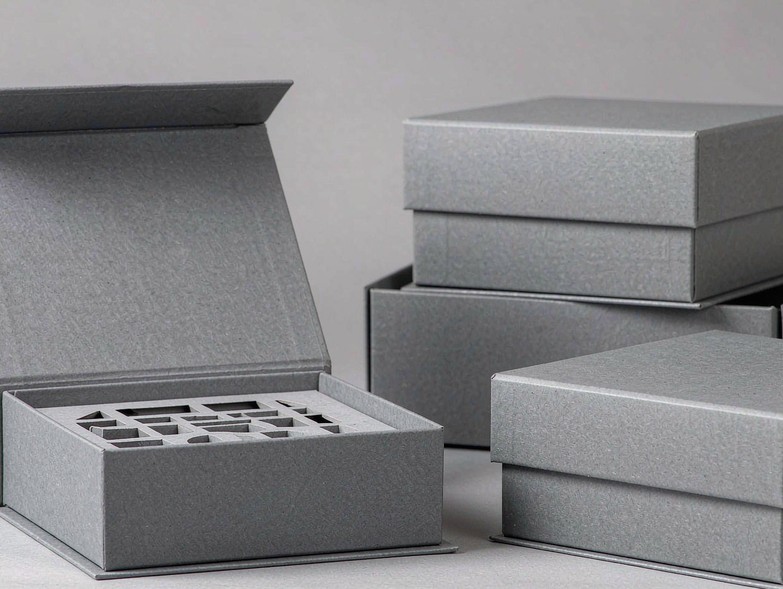
Different tiers of electronic products require different outer structures. A direct packaging manufacturer has the equipment to produce high-volume folding cartons for entry-level gadgets, as well as specialized automated wrapping machines to produce premium rigid boxes for flagship smartphones or high-end wireless headphones. They support custom printed packaging using advanced offset presses, ensuring brand colors remain vibrant and exact across thousands of units. For an in-depth look at how these exterior structures are customized, explore advanced electronic packaging solutions.
Internal Packaging Components
The exterior box is only half of the solution. The interior architecture is critical for product safety. A true manufacturer integrates internal packaging components seamlessly with the outer box. This includes engineering custom inserts (such as EVA foam, molded pulp, or die-cut paperboard), precise product positioning structures, and dedicated accessory compartments. This level of comprehensive manufacturing ensures the charging cables, adapters, and manuals do not scratch the main device during international transit.
4. Quality Control Capability and Production Consistency
For B2B buyers, securing a great sample is easy; replicating that sample 100,000 times without deviation is the true challenge. Bulk buyers fear inconsistent printing colors, varying board thicknesses, and structural weaknesses across different batches.
Direct manufacturers ensure mass production stability by implementing rigorous material inspections—checking paper quality and board thickness—and continuous production monitoring to guarantee printing accuracy and cutting precision.
Material Inspection Protocols
A professional China electronics packaging manufacturer does not leave quality to chance. Quality control begins at the raw material stage. Incoming materials are rigorously inspected for paper quality, moisture content, and board thickness. If a batch of paperboard is too thin or too dry, it will crack during the folding and assembly process. Direct factories reject sub-standard materials before they ever reach the printing press, ensuring the foundation of the packaging is solid.
Production Inspection and Assembly
During mass production, maintaining consistency is paramount because electronics brands require the exact same packaging appearance across all global retail channels. The factory conducts continuous production inspections, monitoring printing accuracy with digital spectrophotometers to prevent color drifting. They check cutting precision and score-line depths to ensure boxes fold crisply and securely. Finally, during box assembly, quality control teams evaluate the final packaging appearance and gluing strength, ensuring every single unit meets the approved prototype standard before shipment.
5. Communication Advantages and Reducing Procurement Risks
The highest hidden cost in B2B procurement is the time lost to poor communication. When launching a new electronic product, time-to-market is critical, and waiting weeks for a trading company to relay a minor structural adjustment is unacceptable.
Working with a direct China electronics packaging manufacturer drastically reduces procurement risks by eliminating communication layers, enabling faster technical feedback, easier design modifications, and transparent supply chain management.
Factory Communication vs Supply Chain Risks
Choosing a factory over a trading company streamlines problem-solving. When you work directly with the manufacturing facility, your engineering and design teams speak directly to the production floor. This direct line of communication significantly lowers trial-and-error costs and accelerates the entire product launch timeline.
Below is a breakdown of the specific advantages gained by bypassing trading companies:
| Factory Capability | Customer Benefit |
| Direct engineering communication | Faster design adjustment and rapid prototyping |
| Production feedback | More realistic, manufacturable packaging solutions |
| Direct quality control | Lower quality risks and immediate defect correction |
| Production scheduling | Better delivery management and lead-time transparency |
| Customization flexibility | Easier product updates for new electronics models |
6. Industry Applications: Consumer Brands, OEM, and Accessories
An experienced electronics packaging factory does not apply a single solution to every client. They adapt their manufacturing and design capabilities to suit the specific demands of different sub-sectors within the technology industry.
A custom electronics packaging manufacturer supports diverse market segments by developing attractive retail presentations for consumer brands, maintaining consistency across multiple SKUs for OEM manufacturers, and organizing compact structures for electronic accessories.
Consumer Electronics Brands
For consumer-facing products like wireless earbuds, smart devices, and personal electronics, the packaging must serve as a silent salesperson. These brands require highly attractive retail presentations and custom product positioning that elevates the unboxing experience. A direct manufacturer helps brands develop structures that stand out on retail shelves while ensuring consistent packaging appearance across all geographic markets. Discover how tailored structural designs benefit consumer brands through specialized electronic packaging development.
OEM/ODM Electronics Manufacturers
OEM customers operate on a different model. They frequently manage multiple product models, different packaging sizes, and rely on stable repeat orders. For an OEM, the packaging supplier must offer robust Electronics Packaging Production Capability. Working directly with a factory helps maintain strict consistency between different production batches. If an OEM releases three different models of a tablet, the factory can engineer a unified outer box with interchangeable custom inserts, standardizing the supply chain and reducing overall costs.
Electronic Accessories Suppliers and Growing Brands
Products such as chargers, USB cables, adapters, and small electronic components operate on tighter profit margins and require highly efficient accessory organization. A professional packaging factory optimizes these compact packaging designs for cost-effective production without sacrificing structural integrity. Furthermore, for growing electronics brands launching new products, a direct manufacturer provides invaluable support through rapid prototype development and design modifications, facilitating a smooth transition from small trial batches to large-scale mass production.
7. Establishing Long-Term OEM Packaging Partnerships
High-value B2B procurement is rarely about a one-time transaction. Electronic products undergo continuous hardware updates, requiring a packaging partner capable of evolving alongside the brand.
Beyond single orders, a reliable electronics packaging supplier acts as a long-term strategic partner, providing stable production capability, continuous design support, and rapid problem-solving for future product updates.
To fully leverage a direct supply chain, buyers must evaluate a factory’s capacity for long-term cooperation. Can they scale up production if a new smart device goes viral? Can they quickly modify an existing die-line if the next generation of a product is 2 millimeters thicker? A true packaging factory vs trading company distinction becomes clear in post-sale support. Direct factories retain your CAD files, cutting dies, and color profiles, ensuring that your second, third, and fiftieth orders are executed with zero friction and perfect consistency.
By prioritizing factories with proven OEM manufacturing experience and dedicated custom packaging support, brands eliminate the instability of opaque supply chains and secure a foundational pillar for their product’s retail success. For more insights into establishing these scalable partnerships, review our comprehensive electronic packaging capabilities.
Conclusion
Choosing the right packaging partner is a critical decision that extends far beyond the unit price of a cardboard box. Relying on trading companies exposes electronics brands to communication delays, hidden markups, and dangerous quality inconsistencies. By partnering directly with a professional Custom Electronics Packaging Manufacturer, brands gain direct control over structural engineering, material selection, and rigorous quality inspection. Whether you require premium rigid boxes for a flagship consumer device or cost-effective folding cartons for OEM accessories, a direct factory provides the stable production capability and rapid problem-solving necessary to secure your supply chain and elevate your brand.
Ready to bypass the middlemen and secure reliable, factory-direct packaging for your electronic products?
As a professional Custom Electronics Packaging Manufacturer, YongjianBox provides complete, end-to-end solutions—from precise structural design to stable mass production.
Contact us today to discuss your custom packaging requirements, request a physical prototype, or receive a direct manufacturing quotation for your next electronics launch.
Frequently Asked Questions (FAQ)
1. What is the main advantage of choosing a Packaging Factory vs Trading Company?
Working directly with a packaging factory provides transparent pricing without middleman markups, faster technical communication with the actual engineers, and direct accountability for quality control and production lead times. Trading companies often obscure the supply chain, making it difficult to control batch-to-batch consistency.
2. Can an electronics packaging manufacturer create boxes for entirely new, unusually shaped devices?
Yes. A professional factory does not rely solely on standard templates. They utilize in-house CAD engineering to develop custom box dimensions and product fitting solutions based precisely on the physical dimensions and weight distribution of your specific electronic device.
3. How does a direct manufacturer ensure consistent packaging quality across large bulk orders?
Direct factories maintain consistency by implementing strict in-house quality control. This includes checking raw material paper quality and board thickness before printing, using digital spectrophotometers to monitor printing accuracy, and conducting rigorous inspections of folding, cutting precision, and final box assembly.
4. Does an OEM electronics packaging factory produce the internal protective inserts as well?
Yes. A capable direct manufacturer provides a complete packaging solution. In addition to the outer folding carton or rigid box, they design and manufacture custom internal components, such as EVA foam inserts, molded pulp, or die-cut paperboard structures to securely position the device and organize accessories.
5. Why is communication faster when working directly with a China electronics packaging manufacturer?
When you work with a factory, your feedback goes directly to the design and production teams. If a structural adjustment is needed, the factory engineers can modify the design and produce a new sample immediately. Trading companies must act as intermediaries, which often delays technical feedback and prototype revisions by days or weeks.
6. Can a direct manufacturer support both small initial launches and large-scale mass production?
Yes. A professional factory with robust electronics packaging production capability is equipped to help growing brands transition smoothly. They can support initial prototype development and small-batch testing for market launches, and then utilize automated high-speed machinery to fulfill massive repeat orders with stable lead times.