Partnering with the wrong packaging manufacturer can result in inconsistent product quality, poor material recommendations, and delayed production schedules that jeopardize high-end product launches. To select a reliable luxury cosmetic packaging supplier, brands must evaluate the manufacturer’s ability to provide complete one-stop solutions, including structural customization, premium material selection, advanced surface finishing, and strict mass production consistency.

Table of Contents
- The Role of a Specialized Luxury Cosmetic Packaging Supplier
- Evaluating Cosmetic Packaging Structure Selection
- Material Selection for High-End Beauty Packaging
- Premium Finishing Options for Brand Differentiation
- Customization Capability and Interior Solutions
- Maintaining Production Consistency in OEM Cosmetic Packaging
- Industry Applications: Skincare, Perfume, and Makeup
1. The Role of a Specialized Luxury Cosmetic Packaging Supplier
The cosmetics industry is fiercely competitive, and packaging has evolved far beyond a simple protective container; it is a critical factor influencing how customers perceive product value.
A professional luxury cosmetic packaging supplier must deeply understand both packaging aesthetics and manufacturing requirements, providing expert guidance on aligning product positioning with the correct structures, materials, and surface finishes.
When selecting a supplier, high-end brands are not just looking for a factory that sells empty boxes. They require a comprehensive solution provider. A reliable supplier understands that luxury packaging represents the brand’s positioning and product quality. They must be capable of translating a brand concept into a production-ready reality. By offering a one-stop service—from packaging consultation and prototype sampling to mass production and strict quality control—a true partner reduces development risks and ensures a seamless transition from the initial design to the retail shelf.
2. Evaluating Cosmetic Packaging Structure Selection
Different cosmetic products require drastically different packaging structures depending on their market positioning and physical protection requirements.
To ensure optimal product presentation and protection, brands must choose a supplier capable of engineering both cost-effective folding cartons for retail and highly stable rigid boxes for cosmetics that demand a premium unboxing experience.
Rigid Boxes for Cosmetics
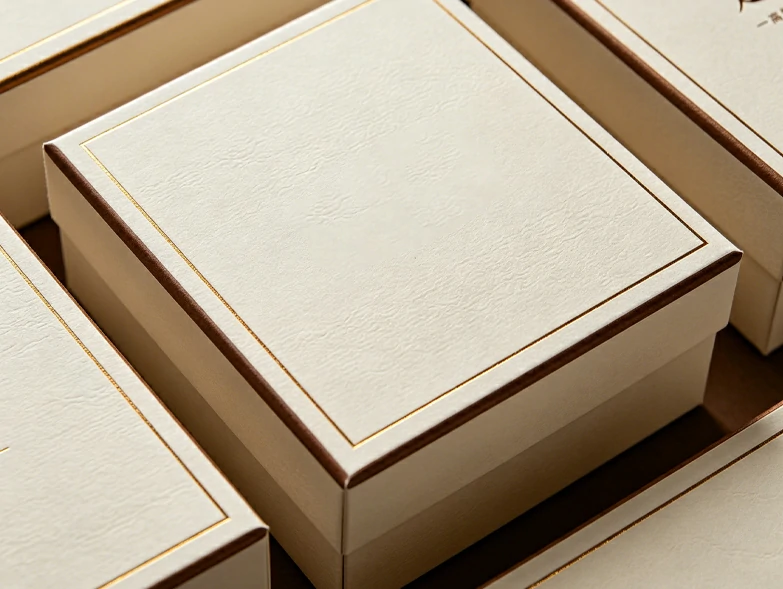
Rigid gift boxes are the industry standard for luxury packaging. They are commonly used for luxury skincare sets, perfume collections, premium makeup kits, and limited-edition products. The primary advantages of rigid structures include robust structural stability, a premium tactile opening experience, and the ability to support heavy customization and advanced finishing techniques. Because they maintain their solid structure, rigid cosmetic gift box packaging provides a significantly higher perceived value compared to standard folding designs.
Folding Cartons
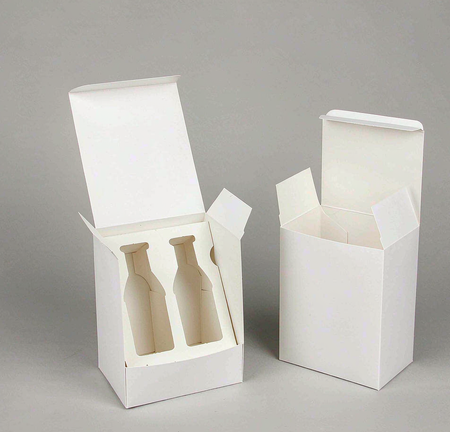
While rigid boxes dominate the luxury sector, folding cartons play a vital role for individual cosmetic products, mass retail lines, and promotional packaging. Their main advantages are cost-effectiveness, lightweight profiles, and high efficiency for large-volume production. Furthermore, they ship flat, which drastically simplifies storage and transportation logistics for emerging beauty brands.
3. Material Selection for High-End Beauty Packaging
The physical material chosen for a cosmetic box dictates its durability, tactile feel, and the brand message it communicates to the consumer.
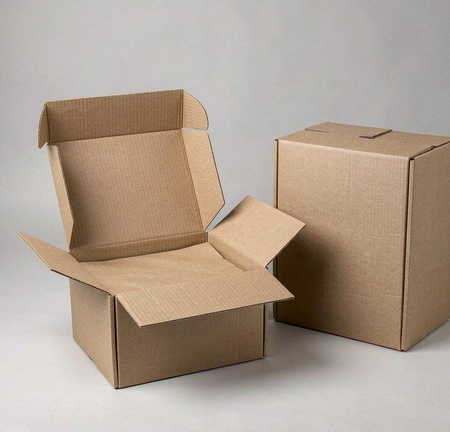
A professional cosmetic packaging supplier guides brands in selecting materials—such as premium rigid board, art paper, or sustainable Kraft paper—that perfectly balance the product’s value, brand image, and production budget.
Material selection should never be a guessing game. It must consider the target customers’ expectations and the brand’s sustainability requirements. For instance, a heavy glass perfume bottle requires a thick rigid board to prevent breakage, while an organic skincare line might prioritize unbleached kraft paper to communicate its eco-conscious ethos.
Cosmetic Packaging Material Comparison
| Material Type | Characteristics | Suitable Applications |
| Rigid Board | Strong structure, excellent shape retention, and premium heavy feel | Luxury skincare, heavy perfume bottles, premium gift sets |
| Art Paper | Smooth surface, excellent color reproduction, and high printing performance | Branded cosmetic boxes, vibrant retail folding cartons |
| Kraft Paper | Natural, unbleached texture, and sustainable/recyclable appearance | Eco-conscious beauty brands, organic skincare lines |
| Specialty Paper | Enhanced physical texture (e.g., linen, leather) and unique visual appeal | Premium makeup collections, limited-edition VIP boxes |
| Corrugated Board | Fluted inner layers providing superior shock absorption and shipping protection | Larger cosmetic gift sets, e-commerce shipping boxes |
4. Premium Finishing Options for Brand Differentiation
In the high-end cosmetics market, standard printing is rarely enough to capture consumer attention and communicate luxury.
Luxury cosmetic packaging relies on advanced surface finishing options—including soft-touch lamination, hot foil stamping, and multi-level embossing—to create strong visual differentiation and an unforgettable premium tactile experience.
A supplier’s mastery over finishing techniques is a key indicator of their capability. Standard CMYK printing and custom brand graphics lay the foundation, but the true luxury feel comes from secondary processes. Matte lamination and soft-touch finishing give the box a velvety, sophisticated texture. Hot foil stamping (in gold, silver, or rose gold) and spot UV coating are strategically applied to highlight logos and key design elements, creating a dynamic interplay with retail lighting. Embossing and debossing add a three-dimensional depth that customers can physically feel, instantly elevating the product’s perceived tier.
5. Customization Capability and Interior Solutions
High-value cosmetic products often contain multiple components, fragile glass containers, and specific presentation requirements.
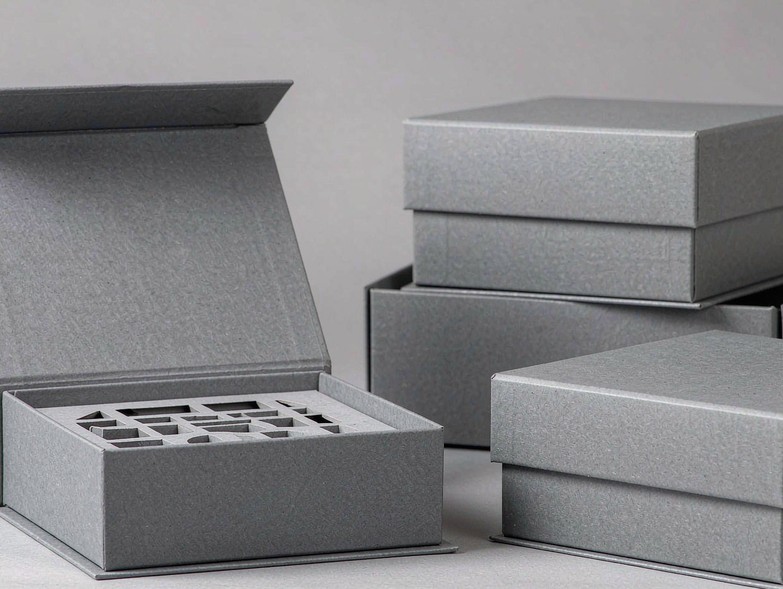
An elite luxury cosmetic boxes manufacturer supports complete structural customization, offering bespoke box dimensions, unique opening mechanisms, and highly protective interior solutions like custom EVA or paper inserts.
When evaluating a supplier, brands must verify their ability to handle complex internal architectures. Custom makeup packaging boxes often require multi-layer packaging or precise product compartments. The supplier must expertly engineer interior solutions—such as die-cut EVA foam inserts, molded paper inserts, product holders, and protective padding—to ensure that delicate serums or eyeshadow palettes are firmly secured during transit. A capable partner provides comprehensive custom packaging solutions, managing everything from structural CAD design and prototype development to rigorous quality inspection.
6. Maintaining Production Consistency in OEM Cosmetic Packaging
Approving a perfect prototype is meaningless if the mass-produced boxes suffer from color variations or structural defects.
Reliable production consistency is the most critical metric for OEM cosmetic packaging solutions; a qualified supplier guarantees that printing colors, material thickness, and structural dimensions remain perfectly stable across all mass production batches.
Cosmetic brands are extremely sensitive to brand consistency. A slight shift in the Pantone color of a box or a millimeter discrepancy in a custom insert can render the packaging unusable, leading to severe product launch delays. A top-tier skincare packaging manufacturer employs strict quality control protocols, utilizing spectrophotometers for color matching and precise die-cutting machinery to ensure that the initial batch and all subsequent repeat orders are virtually identical, significantly reducing procurement risks during product scaling.
7. Industry Applications: Skincare, Perfume, and Makeup
Different beauty sub-sectors present unique packaging challenges that require specialized, industry-specific solutions.
A versatile supplier adapts premium cosmetic packaging to specific applications, delivering heavy rigid boxes with secure inserts for luxury skincare, high-end foil-stamped structures for perfumes, and highly attractive retail cartons for makeup.
Luxury Skincare and Perfume Packaging
Luxury skincare (facial cream sets, serum collections) and perfumes demand a premium appearance, strong product presentation, and highly secure product placement. Recommended solutions almost exclusively involve heavy rigid gift boxes paired with custom inserts (often velvet-lined EVA) and specialty finishing. For perfumes, the focus is on bottle protection, a premium opening experience, and brand storytelling through textured papers and elaborate foil stamping.
Makeup Product Packaging and Emerging Brands
Makeup products—such as eyeshadow palettes, lipstick sets, and cosmetic collections—require highly attractive retail presentation and rapid brand differentiation. Custom cosmetic boxes help these brands create a unique shelf presence while maintaining efficient production costs. Furthermore, for emerging beauty brands planning small product launches, a flexible packaging manufacturer is vital. They provide scalable gift box packaging support, helping reduce initial development risks while preparing the brand for future production expansion.
Conclusion
Selecting the right luxury cosmetic packaging supplier is a strategic decision that directly impacts your brand’s market positioning and supply chain stability. A true packaging partner goes beyond merely supplying boxes; they offer a complete, end-to-end customized solution. By evaluating a supplier’s expertise in rigid box structures, premium material selection, advanced surface finishing, and uncompromising production consistency, cosmetic brands can secure packaging that flawlessly protects their products while delivering an exceptional luxury experience.
Ready to elevate your beauty brand’s packaging?
Share your cosmetic product details, packaging requirements, and brand positioning with YongjianBox to develop a customized luxury packaging solution.
Contact us today to consult with our packaging engineers and receive a tailored quotation for your next cosmetic launch.
Frequently Asked Questions (FAQ)
1. Why are rigid boxes preferred for luxury cosmetic packaging?
Rigid boxes are preferred because they utilize thick, non-collapsible greyboard that provides exceptional structural stability and a heavy, premium tactile feel. This robust structure supports complex surface finishes and custom protective inserts, making it ideal for high-end skincare and perfumes.
2. What is the difference between EVA inserts and paper inserts for cosmetics?
EVA (Ethylene-Vinyl Acetate) foam provides a high-density, shock-absorbing cushion that is precision-cut to hold heavy or fragile glass cosmetic bottles securely. Paper inserts or molded pulp are lightweight, cost-effective, and highly sustainable alternatives, typically used for lighter cosmetics or eco-conscious brands.
3. How does soft-touch finishing enhance custom makeup packaging boxes?
Soft-touch finishing is a specialized lamination process applied over the printed paper. It removes the standard glossy or matte texture and replaces it with a velvety, tactile surface. This instantly elevates the perceived quality of the makeup packaging, creating a luxurious physical interaction for the consumer.
4. How do I ensure my brand colors are consistent across different packaging batches?
To guarantee batch-to-batch consistency, choose an OEM cosmetic packaging supplier that uses strict digital color management systems, such as spectrophotometers and exact Pantone (PMS) matching, rather than relying solely on visual checks.
5. What information should I prepare before contacting a cosmetic packaging supplier?
To receive an accurate customized solution and quotation, you should provide the supplier with your specific product type, exact physical dimensions and weight of the items, your estimated order quantity, target brand positioning, and any specific design or material preferences.