Selecting the wrong packaging substrate dramatically inflates material consumption, increases shipping volume, and leads to catastrophic product damage during distribution. Explore our Custom Packaging Selection Guide for a full decision framework across packaging types. The most cost-effective packaging for household products depends entirely on its distribution role; paperboard offers unmatched economic efficiency for retail shelf presentation, while corrugated packaging becomes the required, cost-effective choice for heavy-duty transport, stacking strength, and e-commerce shipping.

Table of Contents
- Retail vs Shipping Packaging: Defining the Distribution Role
- Technical Profile: Paperboard Packaging for Household Products
- Technical Profile: Corrugated Packaging for Household Products
- Cost-Effective Packaging Matrix: Paperboard vs Corrugated Box
- Right-Sizing and Dimensional Shipping Volume Optimization
- Internal Protection: Integrating Custom Inserts
- Industry Applications for Daily Necessities Packaging
- Factory-Direct Production: Reliable Quality for Bulk Orders
1. Retail vs Shipping Packaging: Defining the Distribution Role
For household goods, paperboard and corrugated packaging are not simply competing materials with one universal winner. They address entirely different points in the product distribution chain.
The most cost-effective packaging matches the actual distribution role; paperboard excels as a lightweight, product-facing retail package, while corrugated packaging is required for heavy-duty secondary transport and e-commerce protection.
A common B2B procurement error is asking, “Which is cheaper?” while comparing the unit purchase price of an empty paperboard carton directly against a corrugated box. This oversimplified comparison ignores the realities of the supply chain. A more useful commercial comparison evaluates packaging material consumption, structural requirements, printing capabilities, and whether the packaging is used as primary retail packaging or secondary transport packaging.
Yongjian effectively reflects this critical distinction in its daily necessities packaging solutions. Retail packaging boxes are engineered as high-volume folding cartons designed for supermarket shelves. Conversely, corrugated packaging boxes are engineered as heavy-duty outer packaging designed for bulk transport. Understanding this distinction is the first step in total packaging cost optimization.
2. Technical Profile: Paperboard Packaging for Household Products
Cartonboard is the undisputed leader for mass-market consumer presentation. Recent industry research from Smithers estimates that almost 57 million tonnes of cartonboard material were produced globally in 2024, with folding-carton consumption alone exceeding 50 million tonnes.
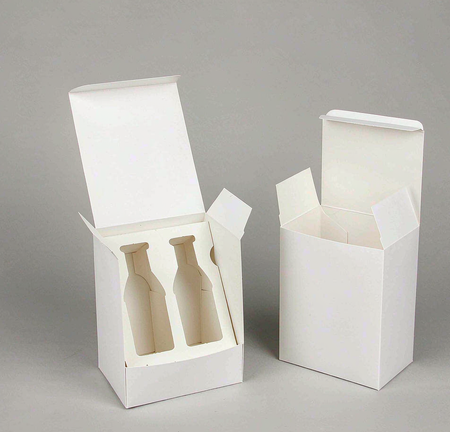
Custom paperboard packaging utilizes lightweight coated, kraft, or recycled paper to create efficient folding cartons that deliver superior offset printing quality and flat-packed transportation advantages.
Efficiency in Retail Presentation
Paperboard is most closely associated with folding cartons and retail packaging boxes. The typical strengths of paperboard packaging for household products include lightweight construction, efficient folding structures, and highly efficient use of material for high-volume products. Because paperboard provides a smooth, non-fluted surface, it supports high-resolution offset printing and detailed graphics, making it the superior format where graphic presentation and retail appeal matter most.
For fast-moving consumer goods, such as cleaning sponges or light personal care items, daily necessities packaging made from paperboard allows brands to achieve a highly attractive shelf presence while keeping the unit cost exceptionally low.
3. Technical Profile: Corrugated Packaging for Household Products
When a product leaves the retail shelf and enters the rigorous logistics network of bulk shipping or direct-to-consumer delivery, standard paperboard is often insufficient.
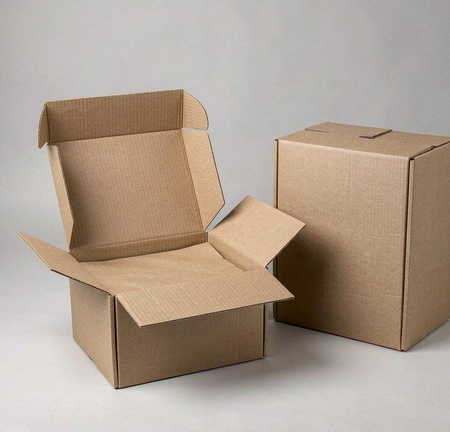
Corrugated packaging for household products features a fluted inner structure engineered to withstand stacking compression, rough handling, and the rigorous demands of long-distance bulk shipment and e-commerce distribution.
Bulk Transit and Compression Strength
Compared to a conventional folding carton, corrugated packaging provides a vastly superior structure for absorbing shock and bearing weight. Corrugated boxes are essential when the packaging needs to withstand vertical stacking on a warehouse pallet, compression from heavy loads, and prolonged handling during longer-distance transportation.
Its cost should therefore be evaluated against the protection it provides rather than simply against a paperboard carton with a lower nominal unit price. If a heavy liquid detergent is shipped in a thin paperboard box, the resulting product leakage and damage will instantly eclipse any initial savings on the packaging material. Furthermore, corrugated packaging is the necessary choice when the household product’s retail carton itself is not designed to function as the primary shipping container.
4. Cost-Effective Packaging Matrix: Paperboard vs Corrugated Box
Selecting the appropriate material requires an objective analysis of how the packaging will perform across various stress points in the supply chain.
Comparing a paperboard vs corrugated box requires evaluating material consumption, structural protection, printing capabilities, and shipping volume to determine the lowest total landed cost.
The following table provides a B2B framework for comparing custom paperboard packaging against custom corrugated packaging:
| Evaluation Criteria | Custom Paperboard Packaging (Folding Cartons) | Custom Corrugated Packaging |
| Primary Distribution Role | Product-facing retail package, supermarket shelves | Secondary/outer transport, bulk shipping, e-commerce |
| Structural Protection | Standard protection; ideal for lightweight/non-fragile items | High compression, stacking strength, shock absorption |
| Material Consumption | Low; lightweight construction | Higher; multi-layered fluted construction |
| Printing & Shelf Appeal | Superior; smooth surface ideal for detailed offset printing | Moderate; best suited for flexographic printing and simple branding |
| Storage & Packing | Highly efficient flat-packed storage | Ships flat, but consumes more dimensional volume |
| Cost Optimization Driver | High-volume printing efficiency and automated assembly | Dimensional-weight reduction and transit damage prevention |
5. Right-Sizing and Dimensional Shipping Volume Optimization
A major oversight in packaging procurement is assuming that the material cost is the only logistical expense. Packaging weight and dimensions heavily dictate overall logistics economics.
Right-sizing packaging structures drastically reduces logistics expenses by minimizing material usage, eliminating empty warehouse space, and lowering dimensional-weight exposure during transit.
Industry research continuously documents the critical importance of lightweighting, right-sizing, and dimensional-weight considerations, particularly for e-commerce and distribution-intensive applications. An unnecessarily large corrugated box increases material usage, consumes excess warehouse space, diminishes pallet utilization, and drives up dimensional-weight shipping fees.
Yongjian explicitly addresses this by offering flat-packed structural solutions designed to reduce sea-freight volume. Package sizes and production volumes can be fully customized according to different products and shipping needs. Therefore, right-sizing must be presented as a primary cost-optimization strategy, rather than simply hunting for a cheaper paper grade.
6. Internal Protection: Integrating Custom Inserts
Evaluating a paperboard vs corrugated box is incomplete without analyzing the interior architecture required to secure the product during transit.
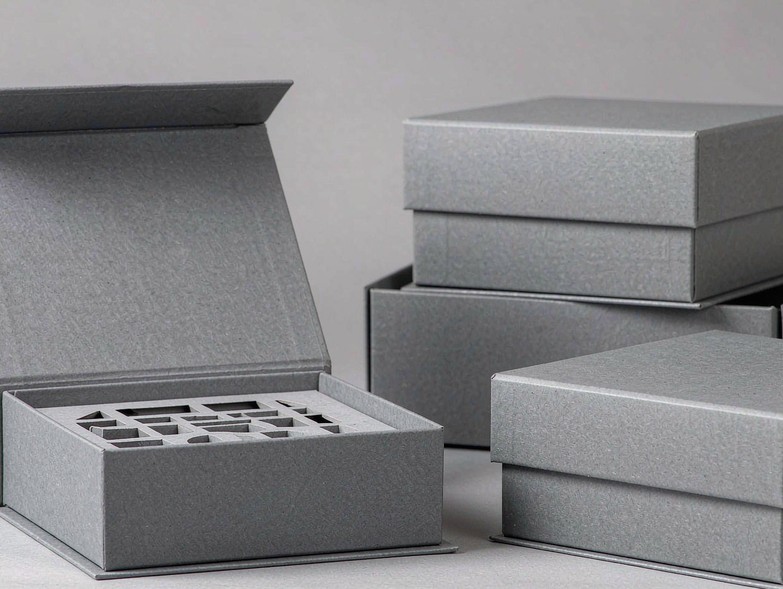
A cost-effective packaging system integrates outer packaging with internal inserts—such as EVA foam, sponge, molded pulp, or paper—to immobilize fragile products and eliminate transit damage risks.
The total packaging system consists of more than just the outer box. A lower-cost folding carton may require an internal insert for positioning or protection, while a corrugated outer box may provide additional transit protection without replacing the retail carton entirely.
The correct B2B cost comparison is therefore: outer packaging + inserts + shipping requirements + product protection risk. If you are packaging fragile ceramic home accessories, utilizing a cost-effective custom paperboard carton paired with a precision-molded pulp insert is often more economical and presentable than using a heavy corrugated box filled with expensive foam.
7. Industry Applications for Daily Necessities Packaging
The versatility of both materials allows them to be adapted to distinct categories within the household goods sector, ensuring that form directly follows function.
Household packaging boxes must align with product needs; cleaning supplies require transport stability, fragile tableware demands structural shock absorption, and supermarket retail products prioritize high-volume branding.
Daily Cleaning Supplies and Tableware
For retail-oriented cleaning products, folding cartons are highly suitable when shelf presentation and branding are paramount. However, for bulk transport, distribution, or e-commerce shipping of those same heavy liquids, corrugated outer packaging becomes appropriate due to handling and compression requirements. For tableware and home accessories, which vary significantly in weight and fragility, the cheapest box may not be the lowest-cost solution if inadequate protection results in product damage.
Supermarket, Retail, and E-Commerce Products
Yongjian explicitly positions its retail packaging boxes as high-volume folding cartons designed to capture attention on supermarket shelves. Here, the purchase decision is influenced heavily by shelf visibility, print quality, and unit cost at scale. Conversely, for e-commerce household products, corrugated packaging is required. These applications are not mutually exclusive; a household product can utilize a printed paperboard retail carton placed inside a corrugated shipping box. The question is not “paperboard or corrugated?” but rather, “where in the packaging system should each one be used?”
8. Factory-Direct Production: Reliable Quality for Bulk Orders
When sourcing high-volume packaging, prioritizing a nominally lower unit price over manufacturing reliability is a critical error that leads to supply chain breakdowns.
Partnering with a factory-direct manufacturer ensures reliable quality for bulk orders, mitigating defect rates and delivering scalable supply chain consistency that lowers the total cost of packaging.
A packaging structure that looks slightly more expensive per unit may produce a lower overall cost at scale if it reduces freight, storage, material consumption, or product damage. Buyers who chase the lowest bid often encounter inconsistent batch quality, high defect rates, and supply chain disruptions.
To mitigate these risks, Yongjian leverages 25 years of manufacturing experience and an infrastructure of over 150 automatic machines. This allows them to maintain a <0.5% stated defect rate, offer sample delivery in 3 days, and achieve a 10–15 day stated production lead time for massive bulk orders. Furthermore, Yongjian states that its factory-direct pricing model can generate 30%–50% savings on high-volume daily necessities packaging. By securing reliable mass production, brands eliminate the hidden costs associated with defective packaging that jams automated lines or ruins the consumer experience.
Conclusion
The debate over paperboard vs corrugated packaging for household products cannot be resolved by simply comparing the raw price of two empty boxes. Paperboard is highly cost-efficient for retail-facing, lightweight household products that require superior graphic presentation and shelf appeal. Conversely, corrugated packaging becomes the most cost-effective and necessary choice when transport protection, stacking strength, bulk shipping, or e-commerce distribution is the primary requirement. By matching the packaging material to its actual distribution role, right-sizing dimensions to slash freight costs, and partnering with a reliable high-volume manufacturer, B2B buyers can achieve true packaging cost optimization.
Let us evaluate your complete packaging structure based on your product dimensions, order volume, and shipping requirements.
Reach out to our engineering team through our packaging consultation portal to receive a customized, factory-direct solution that perfectly balances retail appeal with robust structural protection.
Frequently Asked Questions (FAQ)
1. What is the primary difference between paperboard and corrugated packaging?
Paperboard (used for folding cartons) consists of a single, thick layer of paper ideally suited for high-resolution printing and lightweight retail display. Corrugated packaging features an arched fluted layer sandwiched between two flat linerboards, engineered specifically for vertical crush resistance, stacking strength, and bulk shipping protection.
2. Is paperboard packaging for household products cheaper than corrugated boxes?
Generally, paperboard has a lower unit material cost and is highly cost-effective for retail display. However, if shipping heavy or fragile household products in paperboard results in high damage rates during transit, corrugated packaging becomes the far more cost-effective choice overall due to loss prevention.
3. Can folding cartons for household products survive e-commerce shipping?
Standard folding cartons are usually not strong enough to survive the direct impacts of e-commerce courier networks without an outer shipping box. For direct-to-consumer e-commerce, placing the retail paperboard carton inside a custom corrugated packaging mailer is the industry standard for preventing transit damage.
4. How does right-sizing lower custom corrugated packaging costs?
Right-sizing engineers the box to tightly fit the product, eliminating excess material and empty space. This reduces the box’s dimensional weight, which significantly slashes international sea freight and domestic courier charges, while also allowing more units to fit securely on a standard shipping pallet.
5. Do I need custom inserts for my household packaging boxes?
If your product has multiple loose components, is fragile (like glassware or ceramics), or requires a precise unboxing presentation, custom inserts (EVA foam, sponge, molded pulp, or paper) are essential. They immobilize the product, preventing transit damage that would cost far more than the insert itself.
6. Why is order volume critical when comparing retail packaging boxes?
Custom packaging requires fixed setup costs for physical cutting dies, printing plates, and machine calibration. In high-volume factory-direct production, these fixed costs are distributed across tens of thousands of units, drastically lowering the cost per box. Low order volumes mathematically result in a much higher unit price.