Unforeseen packaging expenses severely erode profit margins for retail brands, OEM manufacturers, and e-commerce distributors. Ignoring structural efficiency leads to inflated shipping fees and excessive material waste. Custom daily necessities packaging costs more than expected because buyers often evaluate only the raw unit price of an empty box, neglecting the total landed cost driven by over-specified materials, complex printing setups, and excessive shipping volume.

Table of Contents
- How Packaging Material Cost Drives Up Initial Quotes
- Structural Engineering and Folding Carton Packaging Cost
- Printing Complexity and Packaging Printing Cost
- The Functional Value of Custom Inserts in Household Packaging
- Why Packaging Box MOQ and Order Volume Dictate Unit Price
- Flat-Packed Structures for Packaging Shipping Cost Optimization
- Defect Rates and the True Value of Factory-Direct Sourcing
1. How Packaging Material Cost Drives Up Initial Quotes
Material selection is the foundation of any custom packaging quote. Buyers often mistakenly request the thickest paperboard available, assuming it provides the best protection, which unnecessarily inflates the baseline price.
Packaging material cost heavily influences initial quotes because unnecessarily thick substrates increase raw material consumption without significantly improving functional protection for standard household goods.
Material Specifications for Household Products
Choosing the correct material requires balancing product weight, retail shelf appeal, and sustainability objectives. A professional manufacturer provides various substrates for custom daily necessities packaging, each serving a distinct cost and performance profile.
- Kraft Paper: Highly cost-effective and ideal for brands pushing an eco-friendly narrative, commonly used for handmade soaps and scented candles.
- Coated Paper: Provides a smooth surface for vibrant, high-resolution retail graphics on folding cartons.
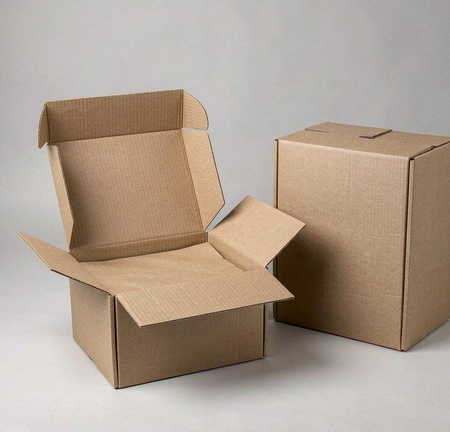
- Corrugated Paper: Essential for heavy or fragile items, such as bulk liquid detergents, providing high vertical crush resistance.
- Recycled Paper: A sustainable option for cost-conscious, mass-market retail goods.
Selecting an over-engineered corrugated board for a lightweight sponge wastes money, whereas using thin coated paper for heavy cleaning supplies will result in structural failure. Optimizing the exact board grade to the product’s physical demands is the first step in effective cost engineering.
2. Structural Engineering and Folding Carton Packaging Cost
The physical architecture of a box dictates how much raw paper is wasted as scrap on the factory floor during the die-cutting process.
Folding carton packaging cost rises when brands choose overly complex, bulky structures that generate excessive die-cutting waste and require slower, labor-intensive manual assembly.
Optimizing Retail Packaging Boxes
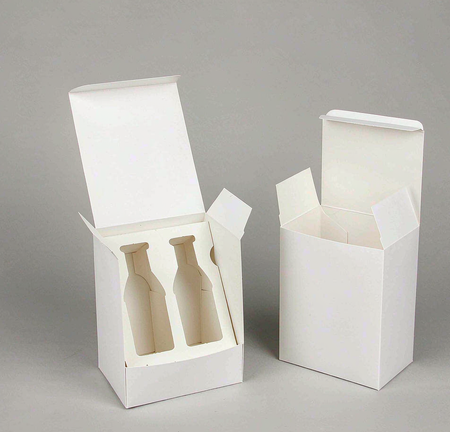
Household products vary wildly in shape. A major reason custom paper box cost exceeds expectations is the use of non-standard box structures that do not nest efficiently on a master paper sheet. Transitioning to a standard crash-lock bottom folding carton allows for high-speed automated gluing on the factory line. Buyers must evaluate custom daily necessities packaging based on packing efficiency rather than assuming the simplest-looking box has the lowest total manufacturing cost.
Custom Packaging Cost Factors Matrix
| Cost Variable | High-Cost Configuration | Optimized Cost-Effective Strategy | Financial Impact |
| Material Choice | Over-specified 400GSM board for light goods | Right-sizing material (e.g., 250GSM) to product weight | Reduces raw material waste and unit price |
| Box Structure | Pre-assembled rigid boxes | Auto-bottom folding cartons | Accelerates factory assembly speed |
| Printing | 5+ Spot Pantone colors with heavy ink coverage | Standard CMYK flexographic or offset printing | Drastically lowers setup and plate fees |
| Shipping Profile | Bulky, 3D assembled shipping formats | Flat-packed structural engineering | Slashes sea-freight and warehousing costs |
3. Printing Complexity and Packaging Printing Cost
Brand presentation on supermarket shelves requires high-quality printing, but uncontrolled graphic designs can drastically inflate manufacturing expenses.
Packaging printing cost escalates when buyers request excessive spot colors, full-coverage heavy ink density, or unnecessary surface finishes instead of optimizing printing methods for mass bulk production.
Offset vs. Flexographic Production
For retail packaging boxes, manufacturers utilize offset printing for high-resolution, photographic-quality imagery, and flexographic printing for cost-effective, high-speed corrugated box branding. When a brand submits artwork containing multiple distinct Pantone (spot) colors, the factory must create specialized printing plates and calibrate the press for each specific color.
Transitioning the artwork to a standard CMYK (four-color process) drastically reduces these setup fees. Furthermore, designing simple branding designs that utilize negative space—the natural color of the kraft or coated paper—rather than full-bleed background inks reduces ink consumption and drying times, effectively lowering the overall custom packaging quote.
4. The Functional Value of Custom Inserts in Household Packaging
Securing fragile items, such as ceramic tableware or multi-component personal care kits, requires internal support structures, which buyers frequently forget to budget for.
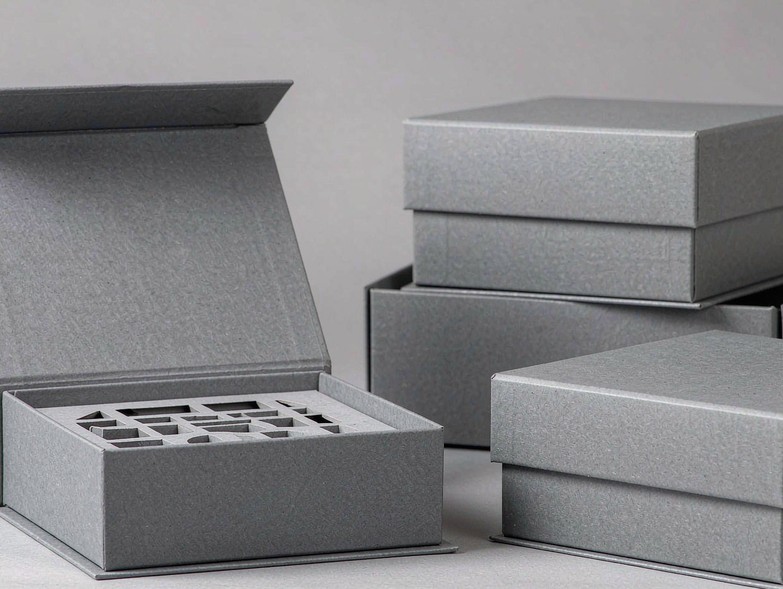
While adding custom inserts increases the initial custom paper box cost, materials like EVA foam, sponge, molded pulp, or paper inserts provide essential structural protection that prevents catastrophic product damage.
Mitigating Product Damage
Viewing inserts merely as an additional packaging expense is a flawed procurement strategy. When shipping heavy glass home accessories without an insert, the products will collide, potentially puncturing the outer carton. A packaging engineer can often replace expensive EVA foam with a cleverly die-cut corrugated paper insert. The paper insert may require a one-time tooling fee for the cutting die, but the long-term unit cost is substantially lower, making the entire household product packaging boxes system highly cost-effective and environmentally friendly.
5. Why Packaging Box MOQ and Order Volume Dictate Unit Price
Factory machine setup—including die-making, plate mounting, and ink calibration—takes the exact same amount of time and labor for 500 units as it does for 50,000 units.
A low packaging box MOQ drastically inflates the unit price because the fixed manufacturing setup costs are distributed across a much smaller production volume.
Scaling for Supermarket and Retail Suppliers
Purchasing managers often suffer sticker shock when requesting custom packaging quotes for small pilot runs. Packaging is an economy-of-scale industry. For fast-moving consumer goods, such as household cleaning supplies or personal care items, scaling up the order volume is the fastest way to drop the unit price.
Yongjian is specifically equipped for high-volume manufacturing, operating 150+ automatic machines. This robust infrastructure allows them to process massive bulk orders with a stated production lead time of just 10–15 days. A packaging supplier should always quote against your expected annual volume; optimizing your supply chain to order quarterly rather than monthly will mathematically reduce the amortization of fixed setup costs per box.
6. Flat-Packed Structures for Packaging Shipping Cost Optimization
Paying to ship empty space across the ocean is the most common and expensive packaging procurement mistake made by international distributors.
Packaging shipping cost accounts for a massive portion of total expenses; packaging cost optimization is achieved by designing flat-packed structures that maximize container density and slash sea-freight volume.
Reducing Total Landed Cost
E-commerce sellers and retail distributors frequently focus entirely on the factory invoice price of the box, ignoring the logistics cost. If you purchase a cheap box that cannot be folded flat, you are paying high international freight rates to ship empty air.
Yongjian engineers custom daily necessities packaging with flat-packed structural solutions designed to reduce sea-freight volume. By optimizing the dimensional footprint of the unfolded box, engineers can fit thousands of additional units onto a single standard shipping pallet. Therefore, a slightly more expensive folding carton that packs 30% more efficiently will yield a significantly lower total landed cost than a nominally “cheaper” box with a bulky shipping profile.
7. Defect Rates and the True Value of Factory-Direct Sourcing
Chasing the absolute lowest unit bid often leads buyers to unqualified facilities, resulting in disastrous supply chain disruptions during critical retail product launches.
A superficially cheap custom packaging quote becomes exceptionally expensive when high defect rates, inconsistent board quality, and misaligned printing cause automated packing line jams and unsellable retail inventory.
Factory-Direct Manufacturing Capabilities
A lower unit price is not a lower total cost if it causes product damage or supply-chain disruption. Inconsistent board thickness means the retail packaging boxes will pop open on the supermarket shelf or jam your automated packing machinery, resulting in massive labor costs and downtime.
To mitigate these risks, Yongjian relies on 25 years of manufacturing experience, resulting in a stated defect rate of <0.5%. Furthermore, dealing directly with the factory floor allows brands to strip out trading markups; Yongjian states that its factory-direct pricing model can yield 30%–50% savings on high-volume retail packaging boxes. With sample delivery in 3 days, daily necessity brands can rapidly test structural iterations until they achieve the perfect balance of cost, aesthetics, and performance.
Conclusion
Custom daily necessities packaging should never be viewed as a fixed expense, but rather as a highly engineered variable. When quotes return higher than expected, it is rarely due to a single factor. By systematically optimizing packaging material cost, simplifying printing complexity, transitioning to automated folding carton structures, and maximizing order volumes, procurement teams can drastically reduce expenses. True cost engineering looks beyond the initial box price, focusing heavily on flat-packed structures to slash shipping costs and factory-direct partnerships to eliminate hidden trading markups and defect-related losses.
Send Your Product Dimensions and Order Quantity for a Packaging Cost Review.
Request a custom packaging quote based on your target volume and contact our packaging engineers to develop a highly efficient, cost-effective retail packaging solution tailored exactly to your daily necessities brand.
Frequently Asked Questions (FAQ)
1. What is the biggest hidden factor in custom paper box cost?
The largest hidden factor is the packaging shipping cost. If a box is structurally inefficient and cannot be flat-packed tightly, its dimensional weight increases, causing international sea-freight and domestic warehousing costs to quickly eclipse the actual manufacturing cost of the paper box.
2. How does corrugated packaging cost compare to standard folding cartons?
Corrugated packaging cost is generally higher than standard folding carton cost due to the multi-layered fluted structure required for impact protection. Corrugated boxes are necessary for heavy items or e-commerce shipping, while lightweight folding cartons are far more cost-effective for high-volume retail supermarket shelves.
3. Why do suppliers require a packaging box MOQ (Minimum Order Quantity)?
Custom manufacturing involves fixed setup costs, including creating physical cutting dies, mounting printing plates, and calibrating high-speed folder-gluer machines. An MOQ ensures these fixed costs are distributed across enough units to keep the individual box price economically viable.
4. Can I reduce my custom packaging quote by changing the printing method?
Yes. If your current design uses multiple spot colors or extensive metallic foils, transitioning to standard CMYK flexographic or offset printing can significantly lower your packaging printing cost. Simplifying the design to use fewer colors reduces plate costs and speeds up high-volume production.
5. How do custom inserts impact the cost of household product packaging boxes?
While adding an insert (like EVA foam or die-cut paper) increases the initial unit cost, it acts as a primary cost optimization tool. Inserts prevent fragile household goods from shifting and breaking during transit, saving the brand massive amounts of money in product replacement and return logistics.
6. Does factory-direct sourcing actually lower custom household product packaging costs?
Yes. By partnering directly with a manufacturer rather than a trading company, brands eliminate the middleman’s margin. Furthermore, direct communication with the factory’s structural engineers allows for rapid packaging cost optimization, ensuring the box is designed specifically to minimize material waste.