Partnering with an unverified packaging vendor can lead to severe food safety compliance issues, structural failures during transit, and inconsistent brand presentation across retail channels. To secure a reliable supply chain, food businesses must rigorously evaluate food packaging suppliers on their food-grade material certifications, structural customization capabilities, mass-production consistency, and factory-direct quality control processes. For deeper benchmarking, see our guide to choosing a reliable food packaging manufacturer and the kraft vs cardboard food box comparison.
Table of Contents
- Do You Use Certified Food-Grade Materials for Custom Food Packaging?
- What Are Your Core Customization Capabilities for Food Packaging Boxes?
- How Do You Ensure Color Consistency in Custom Printed Food Packaging?
- Can Your Food Box Factory Provide Grease and Moisture Resistance?
- Do You Operate as a Direct Food Packaging Boxes Manufacturer or a Trading Company?
- What Are Your Minimum Order Quantities (MOQ) and Scalability?
- How Do You Manage Quality Control Across Repeated Bulk Orders?
- Can You Provide Physical Prototypes Before Mass Production?
- What Are Your Standard Lead Times and Delivery Reliability?
- Do You Have Experience Supplying My Specific Food Industry Sector?
1. Do You Use Certified Food-Grade Materials for Custom Food Packaging?
Material safety is the non-negotiable foundation of any food packaging project. Using standard industrial paperboard for food applications can result in toxic chemical migration.
Reliable commercial food packaging suppliers guarantee safety by exclusively sourcing certified food-grade materials, such as FDA-compliant SBS paperboard and eco-friendly kraft paper, ensuring no chemical transfer occurs during direct food contact.
Technical Compliance and Safety Risks
When evaluating custom food packaging, buyers must demand transparency regarding material origin. Standard recycled paper often contains mineral oils from residual printing inks, which can migrate into hot or greasy foods. A professional packaging partner will recommend virgin Solid Bleached Sulfate (SBS) paperboard or food-safe kraft paper. These substrates are manufactured without harmful bleaching agents or heavy metals, ensuring strict compliance with global food safety standards. Furthermore, the supplier must guarantee that all adhesives and inks used in the manufacturing process are non-toxic and soy- or water-based.
2. What Are Your Core Customization Capabilities for Food Packaging Boxes?
Food products come in countless shapes, sizes, and consistencies. Standard, off-the-shelf boxes rarely provide optimal protection or branding opportunities.
A professional custom food box supplier offers comprehensive structural engineering, die-cut window integration, and precise dimensional adjustments to ensure custom food packaging boxes perfectly fit, protect, and present the specific food product.
Engineering Custom Packaging Structures
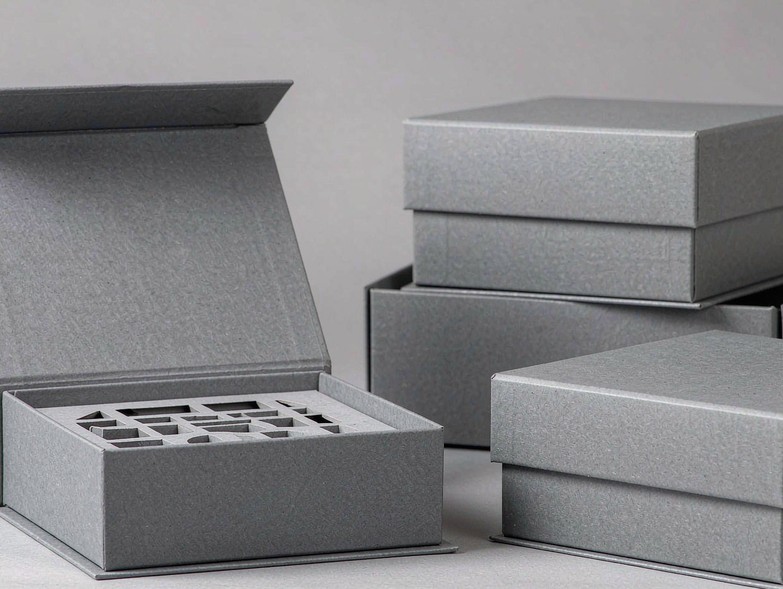
B2B buyers are not just looking for a container; they are looking for a tailored packaging solution. A qualified manufacturer employs CAD engineers to design structures tailored to the product’s weight and fragility. For instance, bakery packaging requires custom die-cut inserts to prevent cupcakes from colliding during transit, while takeaway boxes may require specific interlocking fold structures for rapid assembly in a busy commercial kitchen. Assessing a supplier’s ability to create custom printed food packaging with unique, functional designs is critical for brand differentiation and operational efficiency.
3. How Do You Ensure Color Consistency in Custom Printed Food Packaging?
A brand’s colors are its visual signature. Inconsistent printing makes a food product look cheap, expired, or counterfeit, destroying consumer trust.
Top-tier food packaging suppliers maintain strict brand identity by utilizing spectrophotometers and Pantone Matching Systems (PMS), keeping the color variance (Delta E) below 2.0 across all mass production batches.
Printing Technologies and Quality Assurance
Whether running an initial launch of 5,000 units or a wholesale food packaging order of 500,000 units, color consistency is often a major pain point for buyers. Ask the supplier about their printing technology (e.g., advanced Heidelberg offset presses or high-speed flexographic printers). They must have a standardized process for color calibration. Relying on visual checks is insufficient; the factory must use digital colorimetry to ensure the exact shade of your logo printed in January perfectly matches the batch printed in November.
4. Can Your Food Box Factory Provide Grease and Moisture Resistance?
Food packaging often operates in extreme micro-climates, dealing with steam, hot oils, and condensation from refrigeration.
To prevent structural collapse and leaks, a capable food box factory applies specialized barrier coatings, such as food-grade aqueous varnishes, PE linings, or PLA films, tailored to the specific moisture and grease levels of the food.
Barrier Coating Selection and Application
Without the correct barrier, paperboard absorbs moisture, loses its rigidity, and collapses. A reliable food packaging boxes manufacturer will analyze your product and recommend the appropriate internal coating. Understanding the technical specifications of these barriers is essential for balancing performance with sustainability goals.
Food Packaging Material and Barrier Comparison
| Base Material | Typical Weight | Barrier Coating Type | Primary Performance Benefit | Ideal Food Application |
| Virgin Kraft Paper | 250gsm – 350gsm | Uncoated / Natural | Breathable, prevents condensation | Dry baked goods, artisan breads |
| Kraft Paperboard | 300gsm – 400gsm | PE (Polyethylene) Lining | High grease and liquid resistance | Hot takeaway foods, fried items |
| SBS Paperboard | 300gsm – 350gsm | PLA (Polylactic Acid) | Eco-friendly/compostable grease barrier | Premium salads, organic foods |
| Corrugated (E-Flute) | 1.5mm thickness | Food-grade Varnish | High structural rigidity & heat retention | Pizza, heavy catering platters |
5. Do You Operate as a Direct Food Packaging Boxes Manufacturer or a Trading Company?
Supply chain transparency directly impacts your bottom line, quality control, and problem-solving speed.
Partnering with a direct food packaging boxes manufacturer eliminates middleman markups, accelerates technical communication, and provides buyers with greater transparency regarding raw material quality and actual factory production schedules.
The Factory Direct Advantage
Many businesses unknowingly purchase from trading companies rather than actual factories. A true China food packaging box supplier owns the production equipment—from printing presses to folder-gluers. Buying factory-direct means you are communicating directly with the engineers and production managers. If a structural adjustment is needed to accommodate a new food container size, a direct factory can modify the die-line and produce a new sample in days. A trading company must relay this information, often resulting in miscommunications and weeks of delays.
6. What Are Your Minimum Order Quantities (MOQ) and Scalability?
Purchasing flexibility is critical, especially when launching a new seasonal menu item or testing a new retail product line.
Wholesale food packaging suppliers should offer flexible minimum order quantities (MOQs) for market testing (e.g., 1,000 to 3,000 units) while possessing the automated machinery capacity to scale up to millions of units seamlessly.
Balancing Trial Costs with Wholesale Capacity
A common hurdle in B2B packaging procurement is navigating rigid MOQ policies. A supportive manufacturer understands that food brands need to mitigate risk. They should be willing to accommodate smaller initial runs using digital printing or combined offset runs to lower trial costs. However, you must also verify their maximum capacity. If your product goes viral, can the factory produce 200,000 custom food packaging boxes within a tight timeframe without compromising on structural integrity?
7. How Do You Manage Quality Control Across Repeated Bulk Orders?
The true test of a supplier is not the quality of the first sample, but the consistency of the tenth mass production run.
A reliable packaging supplier for food brands enforces strict Standard Operating Procedures (SOPs), conducting dimensional tolerance checks and fold-cracking inspections to ensure the 100,000th box is identical to the approved sample.
Preventing Batch-to-Batch Deterioration
Many buyers complain that their first bulk order was perfect, but subsequent orders suffered from thinner paper, cracked fold lines, or misaligned gluing. Ask the supplier about their in-line quality inspection processes. Do they monitor paper grain direction to prevent score cracking? Do they test adhesive strength in different humidity conditions to ensure takeaway boxes don’t unglue during hot summer deliveries? Consistent quality control is far more valuable than a slightly lower initial price quote.
8. Can You Provide Physical Prototypes Before Mass Production?
In food packaging, virtual 3D mockups are not enough. You must physically test how the packaging interacts with the actual food product.
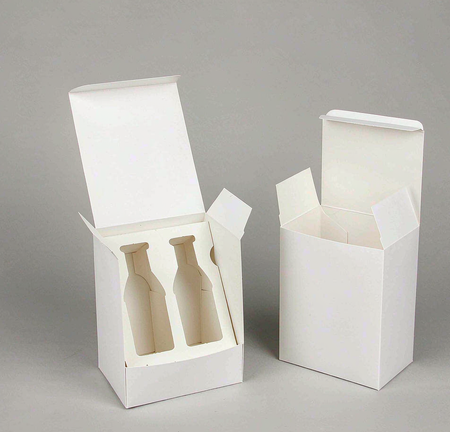
Expert suppliers mitigate structural risks by providing unprinted white dummies and full-color physical prototypes, allowing brands to test product fit, thermal retention, and grease resistance before committing to mass production.
The Importance of Physical Testing
Before investing in custom printed food packaging, you must conduct real-world tests. Put your hot, greasy food in the prototype dummy. Does steam cause the lid to warp? Does grease soak through the corners? Does the locking mechanism hold when the delivery driver carries the box with one hand? A professional supplier expects and encourages this testing phase, rapidly iterating the structural design based on your physical testing feedback.
9. What Are Your Standard Lead Times and Delivery Reliability?
In the food service industry, running out of packaging means you cannot sell your product. Delivery reliability is a survival metric.
Commercial food packaging suppliers ensure supply chain stability by committing to transparent lead times—typically 10 to 15 days for standard production—and maintaining proactive communication if supply chain disruptions occur.
Production Scheduling and Communication
Ask potential suppliers about their typical turnaround times for both new orders (which require die-making and plate setup) and repeat orders. Evaluate their communication speed during the quoting and sampling phase; if they are slow to respond before they have your money, they will be even slower when a problem arises during production. A reliable supplier provides clear production schedules, accurate shipping logistics, and rapid problem-solving support.
10. Do You Have Experience Supplying My Specific Food Industry Sector?
A supplier who excels at making frozen food cartons might struggle to produce an elegant bakery box. Industry-specific experience drastically reduces the learning curve.
A specialized packaging partner demonstrates proven experience in your specific niche, understanding the unique ventilation needs of takeaway restaurants, the display requirements of bakeries, and the shelf-life demands of retail food brands.
Sector-Specific Packaging Knowledge
- Restaurants & Takeaway Brands: Require durable, well-ventilated, grease-resistant custom food boxes that maintain brand visibility during third-party delivery.
- Bakeries & Dessert Brands: Prioritize structural protection (inserts to hold pastries) and high-end aesthetic presentation (die-cut clear windows).
- Food Manufacturers & Retailers: Focus on high-speed automated packing compatibility, strict FDA/FSC compliance, and long-term shelf stability under varied lighting and temperature conditions.
- Packaging Distributors: Need a supplier with vast production capacity, a wide catalog of standard and custom structures, and highly competitive wholesale pricing.
Conclusion
Choosing the right food packaging supplier is a strategic decision that directly influences your product’s safety, your brand’s market perception, and your operational efficiency. By asking these ten critical questions, procurement teams can filter out inexperienced vendors and identify true manufacturing partners. Prioritize suppliers who offer factory-direct transparency, certified food-grade materials, robust customization capabilities, and unwavering quality control across mass production runs.
Ready to secure a reliable packaging supply chain for your food brand?
As a senior Packaging Engineering Consultant at Dongguan Yongjian Paper Products Co., Ltd., with over 20 years of expertise in customized paper packaging, we deliver FDA-compliant, structurally engineered, and flawlessly printed packaging solutions.
Contact our technical team today to request a professional structural consultation, physical packaging prototypes, material safety evaluations, or a wholesale quotation for your custom food packaging project.
Frequently Asked Questions (FAQ)
1. What makes a packaging material “food-grade”?
Food-grade packaging materials are manufactured under strict hygiene standards without the use of toxic chemicals, heavy metals, or hazardous bleaching agents. They are certified by regulatory bodies (like the FDA or EFSA) to ensure that no harmful substances will migrate from the packaging into the food product upon direct contact.
2. Can a food box factory print my custom logo on the inside of the box?
Yes, but it requires extreme caution. Printing on the inside (the food-contact side) requires highly specialized, certified food-safe inks and coatings. Most brands choose to print their custom designs exclusively on the exterior to eliminate any risk of ink migration, using a safe PE or PLA lining on the inside.
3. Why do I need a physical white dummy sample before ordering custom food boxes?
A white dummy (an unprinted, structurally accurate prototype) allows you to physically test the packaging. You can place your actual food product inside to verify the dimensions, test the locking mechanisms, and ensure the box can support the weight of the food without bending or tearing.
4. How do wholesale food packaging suppliers keep costs down for custom designs?
Wholesale suppliers achieve cost efficiency through economies of scale. Once the initial setup costs (cutting dies and printing plates) are paid, high-speed automated equipment (offset printers and folder-gluers) can produce thousands of units per hour, drastically reducing the cost-per-unit for large bulk orders.
5. What is the difference between PE coating and PLA lining in custom food packaging?
Both provide a moisture and grease barrier. PE (Polyethylene) is a traditional plastic coating that is highly effective and cost-efficient but makes the paperboard non-compostable. PLA (Polylactic Acid) is a plant-based bioplastic that offers similar barrier properties but allows the entire box to remain commercially compostable and eco-friendly.
6. How long does it usually take to produce custom printed food packaging?
For a reliable manufacturer, initial orders usually take 12 to 18 days after the final artwork and physical sample are approved, as this accounts for die creation and plate setup. Repeat orders are generally faster, typically requiring 8 to 12 days for mass production, excluding shipping transit times.