Pick the wrong box and you quietly lose money, slow your delivery, and weaken the product on the shelf. In 25 years of making paper tubes and boxes for brands in Europe, the Americas, and the Middle East, the same mistake shows up again and again: packaging gets decided last, on unit price alone, and then it costs more than it saved. This guide gives you a four-step path, define the product, pick the structure, pick the material, pick the supplier, and shows how each step moves your landed cost and shelf result. Work through it and you can brief a factory with confidence instead of guessing.

- Define your product before choosing any box
- Choose the box structure: rigid vs folding carton
- Choose the material and surface finish
- Choose a reliable supplier: factory vs trading company
- Apply the framework by industry
- Common mistakes that raise cost
- Decision framework summary
- Conclusion
- Talk to our packaging engineers
1. Define Your Product Before Choosing Any Box
Packaging is an engineering decision, not a finishing touch. Before you compare boxes, write a short product brief. Four facts drive every later choice.
Dimensions and weight come first. Length, width, height, and gram weight set the wall thickness, board grade, and whether you need an insert. A 20-gram earbud case and a 2-kilogram gift hamper need completely different structures.
Fragility and category come next. Jewelry scratches, cosmetics leak, electronics shock, food spoils or greases. Each carries its own protection rule, and food plus some children’s items carry their own compliance rule.
Retail price point sets the ceiling. A $3 item rarely justifies a rigid gift box. A $300 item often needs one so the packaging matches what the buyer expects. As a working rule, keep packaging at 5 to 15 percent of retail price, then adjust by category.
Logistics and market decide the rest. Sea freight rewards flat-pack. Air freight rewards light weight. The EU and US add recycling rules and, for food contact, food-grade proof. Pick a board that clears those rules before launch, not after.
2. Choose the Box Structure: Rigid vs Folding Carton
The structure choice drives most of your cost and most of your shelf impact. The two workhorses are the rigid box and the folding carton.
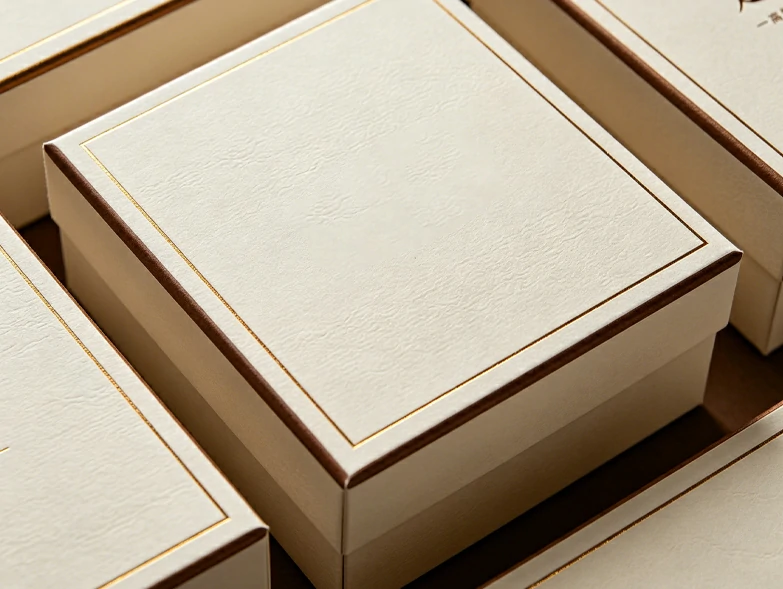
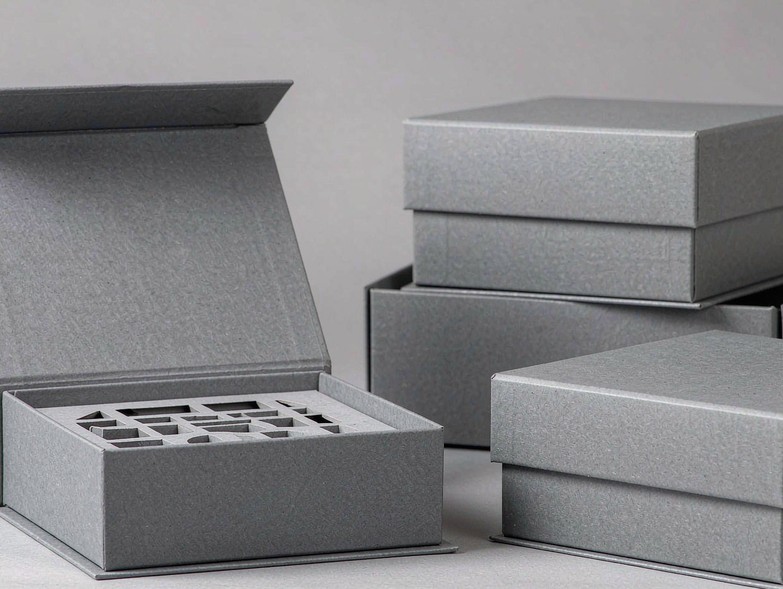
A rigid box, sometimes called a setup or gift box, arrives pre-formed. A wrapped greyboard shell gives it a solid, premium feel and holds its shape on the shelf. The cost is real: it uses more board, needs hand wrapping or semi-auto lines, and ships at full volume, so sea freight per unit runs higher.
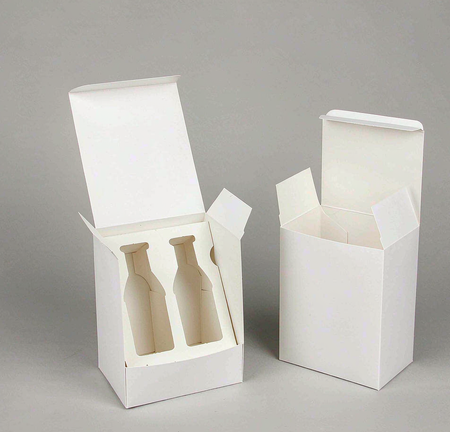
A folding carton is creased, printed flat, and glued or erected after filling. It ships flat, runs on fast automated lines, and costs far less per unit at scale. The trade-off is a lighter, less substantial feel and a bit more assembly labor at the fulfillment end.
| Factor | Rigid box | Folding carton |
|---|---|---|
| Shipping volume | Full (pre-formed) | Flat (flat-pack) |
| Shelf feel | Premium, substantial | Clean, lighter |
| Unit cost at scale | Higher | Lower |
| Assembly | Minimal at fill | Erect before fill |
| Best for | Luxury, gifts, electronics | Retail, subscription, volume |
The right answer changes by category, and we have broken it down for the main ones. Cosmetics brands where the unboxing is part of the product often justify rigid boxes, and our guide to rigid vs folding for cosmetic packaging compares the trade-offs in detail. Electronics teams usually weigh protection against freight, which we cover in the electronics structure comparison.
For daily necessities sold at volume, folding cartons almost always win on cost, as our household packaging analysis shows. If you want the general logic without a category lens, our overview of rigid vs folding for any brand sets the baseline.
3. Choose the Material and Surface Finish
The base substrate drives cost, print quality, recyclability, and protection. The common choices are white card, greyboard, kraft, and food-grade board.
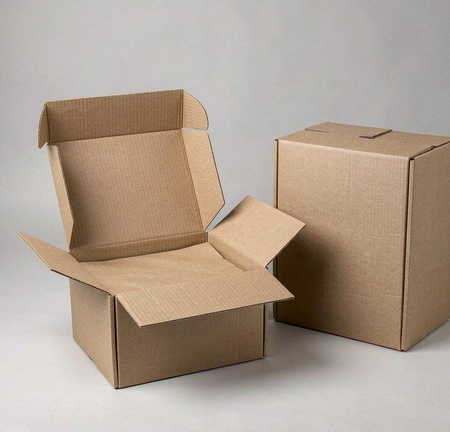
White card prints sharply and folds cleanly, which is why it dominates folding cartons and beauty packaging. Greyboard is the rigid core inside premium boxes, and its thickness sets how solid the box feels. Kraft reads natural and eco, popular with sustainable food and lifestyle brands, though its brown base limits some print finishes. Food-grade board is certified for direct or near-direct contact and must meet local food rules.
Surface finish is where brand signal lives, and where cost creeps up. Matte or gloss lamination protects the ink and adds tactility. Foil stamping and embossing or debossing lift perceived value but add a press pass and a plate. Spot UV highlights a logo without coating the whole box.
| Material | Strength | Best use |
|---|---|---|
| White card | Good print, light | Folding cartons, beauty |
| Greyboard | Rigid, strong | Rigid luxury boxes |
| Kraft | Eco, rustic | Food, sustainable brands |
| Food-grade board | Safe, compliant | Food and beverage |
Material also depends on what it holds. Jewelry boxes need a grade that resists tarnish and holds an insert securely. Our guide to choosing jewelry box material covers grades and insert fit.
For food, the kraft versus cardboard decision changes both the sustainability story and the print result, which we compare for custom food boxes. Household goods sit between shelf appeal and shipping protection, and our paperboard vs corrugated analysis shows when each wins.
4. Choose a Reliable Supplier: Factory vs Trading Company
Once structure and material are set, the supplier decides whether the plan survives at scale. You have two routes: a factory-direct partner or a trading company.
A factory removes the middleman markup and controls quality end to end, from incoming board to outgoing carton. A trading company adds service and often faster communication, but relays engineering and lifts cost. For custom structural work, direct access to the factory’s engineering team saves rounds of back-and-forth.
Evaluate any supplier on five points. Engineering skill: can they propose structure, not just copy a sample? Capacity: lines and headcount to meet your volume. Quality system: ISO 9001 and a defined inspection flow. Compliance: first-hand CE, FDA, and FSC proof, not a borrowed certificate. Export experience: incoterms, documentation, and sea freight handling.
| Dimension | Factory-direct | Trading company |
|---|---|---|
| Price | Lower (no markup) | Higher |
| Engineering | Direct, fast | Relayed |
| Quality control | End-to-end | Shared |
| Compliance proof | First-hand | Collected |
Vetting also differs by category, and we have written a technical guide for each. Choosing a cosmetic box manufacturer centers on structure and finish criteria. Sourcing a luxury rigid gift box is covered in our gift box manufacturer guide.
Food packaging must put grade compliance first, as our food packaging manufacturer guide explains. For complex tech products, the factory versus trading company decision is sharper because protection matters more, and our electronics packaging guide covers it.
5. Apply the Framework by Industry
The four-step path adapts to each category. Jewelry leads with material grade and insert fit, then structure by price tier. Electronics leads with protective inserts and ESD-safe board, then a structure that survives drops. Food leads with grade-compliant board and grease resistance, then shelf format. Daily necessities lead with cost per unit at volume.
For a full end-to-end example, our complete guide to custom jewelry packaging applies every step, material, price tiers, and production timeline, to one product category so the framework becomes concrete.
6. Common Mistakes That Raise Cost
Five mistakes repeat across projects, and each one raises cost.
Over-engineering. Putting a $3 item in a rigid box wastes margin with no sales gain. Match box cost to retail price.
Ignoring flat-pack. Pre-formed boxes can double sea-freight volume and erase the unit saving.
Skipping compliance. EU and US food and child-related rules need proof before launch. Retrofitting is expensive.
Choosing on price alone. A low unit cost with a high defect rate raises total cost through returns and reruns.
No prototype. Sampling first catches structural and print errors at low cost. Skipping it pushes those errors into a full production run.
7. Decision Framework Summary
| If your product is | Choose |
|---|---|
| Low price, high volume | Folding carton, white card |
| Premium, gift, luxury | Rigid box, greyboard, foil |
| Fragile electronics | Rigid or folded box plus EVA or paper insert |
| Food or beverage | Food-grade board, kraft or cardboard |
| Export to EU or US | Compliant board, FSC, factory-direct QA |
8. Conclusion
Good packaging starts with the product, not the box. Define dimensions, fragility, price, and market, then pick structure, material, and a factory-direct supplier in that order. This sequence protects margin, speeds delivery, and meets compliance without over-engineering. The category guides linked above take each step deeper when you are ready.
9. Talk to Our Packaging Engineers
Yongjian has made paper boxes and tubes since 1999, with CE, FDA, and FSC compliance, 3-day sampling, and 10 to 15 day production across a 15,000 square meter base. Send us your product size, quantity, and market, and we will engineer a structure and material plan with a quote. Request a packaging consultation and we will reply with options, not a generic price list.
10. FAQ
What is the first step in packaging selection?
Write a short product brief: dimensions, weight, fragility, retail price, and target market. These four facts drive every later choice about structure, material, and supplier.
Rigid box or folding carton, which is cheaper?
Folding cartons are cheaper at scale and ship flat, which cuts freight. Rigid boxes cost more but lift perceived value. Choose by retail price point, not by preference.
Why choose a factory-direct supplier?
A factory removes trading markup, controls batch quality end to end, and gives first-hand compliance proof such as CE, FDA, and FSC. That lowers landed cost and reduces risk on large orders.
How long does custom packaging take?
Sampling typically takes about 3 days. Mass production takes about 10 to 15 days after confirmation. Complex structures or special finishes may extend the timeline.
What compliance matters for export?
For the EU and US, check food-grade status for food contact, FSC for fiber sourcing, and CE or FDA where applicable. Confirm proof with the supplier before launch.
Should I always use a rigid box for luxury?
Usually yes for top-tier gifts, but a high-quality folding carton with foil or embossing can read as premium at lower cost. Test both with a prototype before committing.
How much should packaging cost relative to the product?
A common working range is 5 to 15 percent of retail price. Low-price items sit at the low end. High-value items can justify more because packaging protects both the product and the brand.